Kitchen Installation Costs in East Lothian - What to Budget
Replacing a kitchen in East Lothian typically costs anywhere from £5,000 to well over £40,000, depending on the size of the room, the materials chosen, and how much of the work is structural. Most homeowners land somewhere in the middle, spending £10,000–£20,000 on a mid-range full-fit with standard appliances and worktops. Getting a realistic figure early means fewer surprises once tradespeople are on site.
The Three Cost Tiers
Kitchen costs split naturally into three bands, and understanding which band your project sits in shapes every subsequent decision.
Entry-Level Kitchens
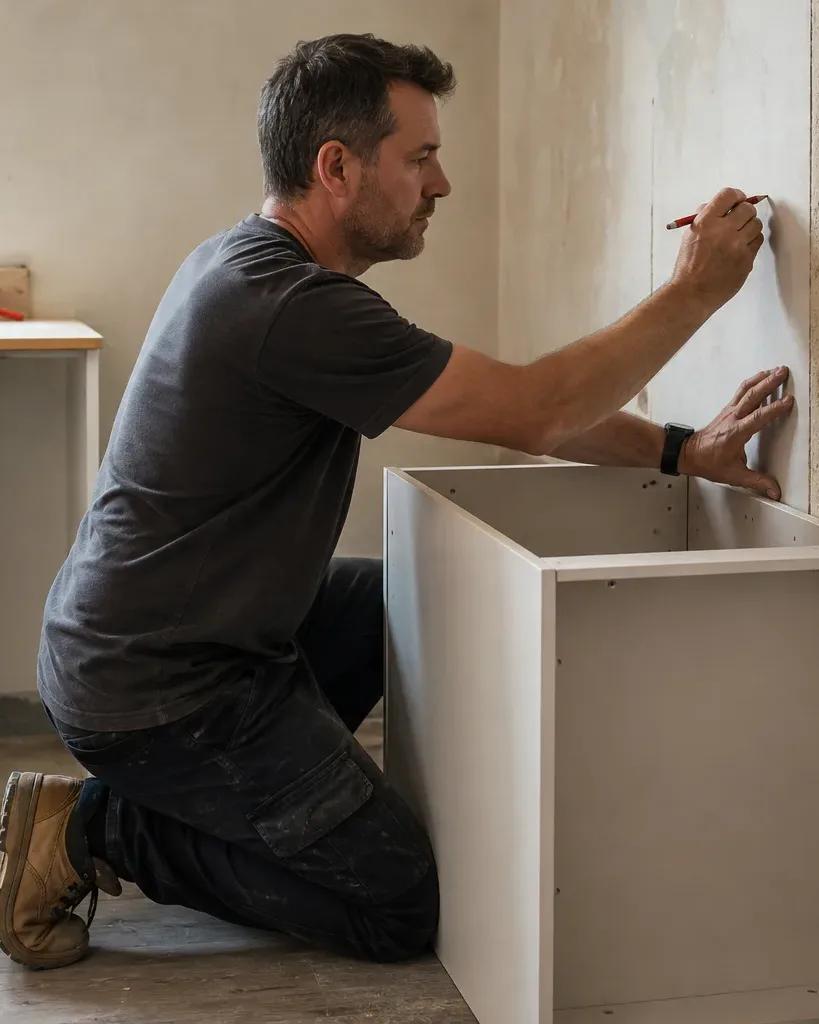
An entry-level fitted kitchen, supplied and fitted, runs £5,000–£10,000 in East Lothian. This range covers flat-pack or semi-rigid carcasses, laminate worktops, and mid-market appliances. It excludes structural alterations, so if your project involves removing a wall or extending, budget separately for that work.
This tier suits smaller kitchens, rental properties, or homes where the layout is staying exactly as it is. Finish quality is functional rather than showcased.
Mid-Range Kitchens
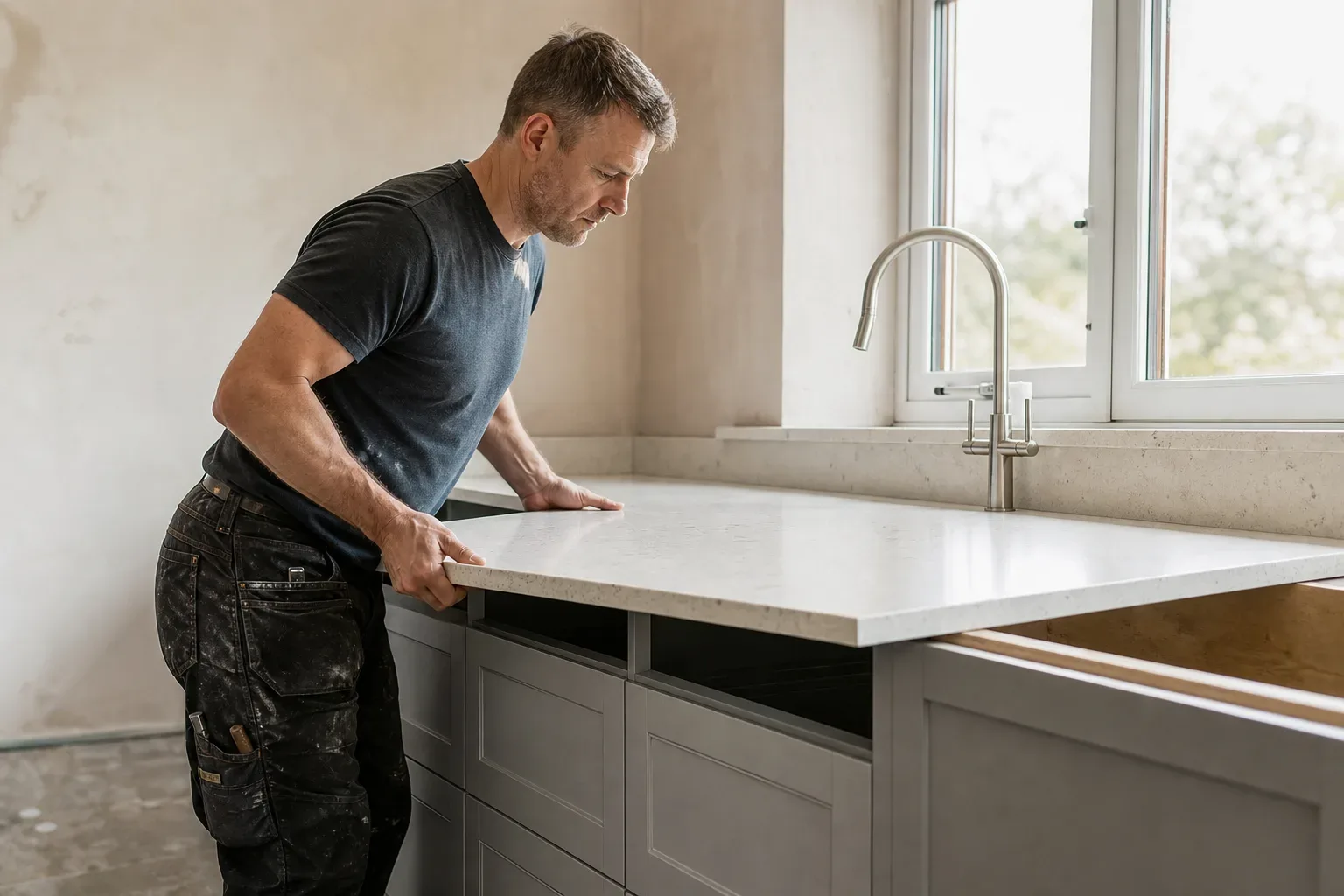
The £10,000–£20,000 band is where most full-fit projects in East Lothian sit. It covers rigid carcasses, a wider choice of door styles, standard integrated appliances, and solid or composite worktops. Quartz worktops installed typically cost £300–£600 per linear metre, while solid wood options run £150–£350 per linear metre depending on species.
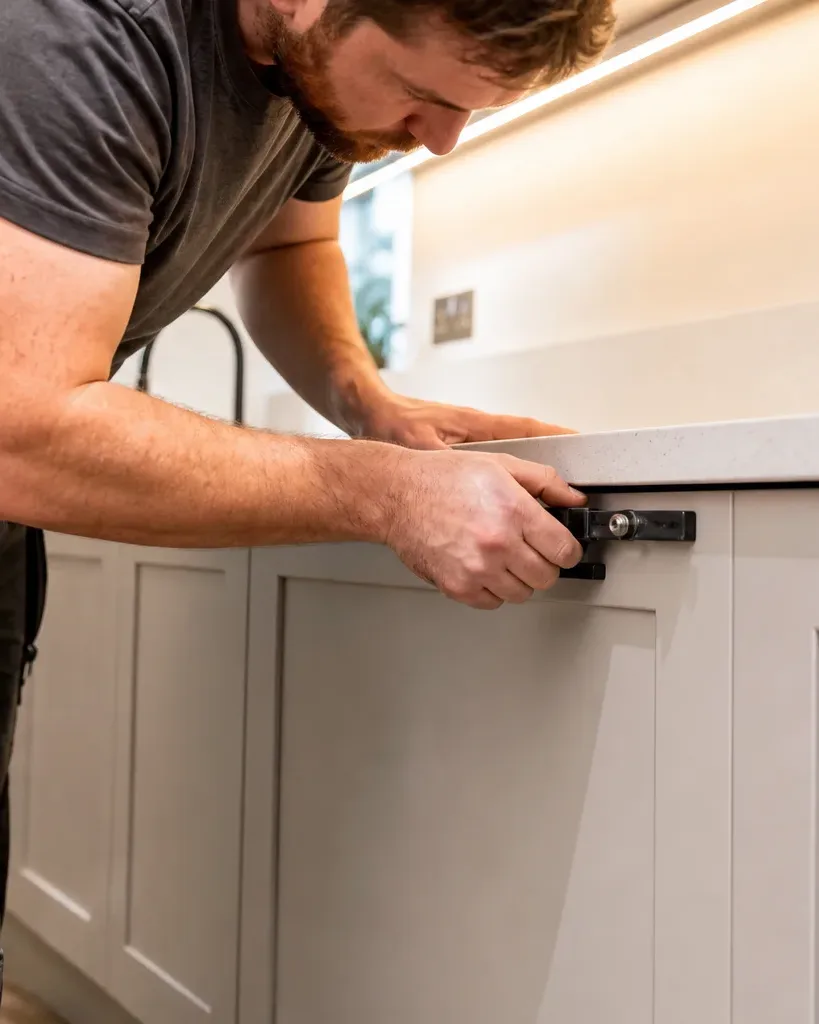
This range also accommodates soft-close hinges, under-cabinet lighting, and a reasonable degree of layout adjustment. Most households with a mid-sized kitchen and no structural work fall here.
Premium and Bespoke Kitchens
Premium installations start at £20,000 and climb past £40,000 for bespoke projects with in-frame cabinetry, high-spec appliances, and materials such as large-format porcelain slabs or hand-painted solid wood doors. Porcelain worktops installed cost £400–£700 per linear metre, reflecting the specialist fabrication they require.
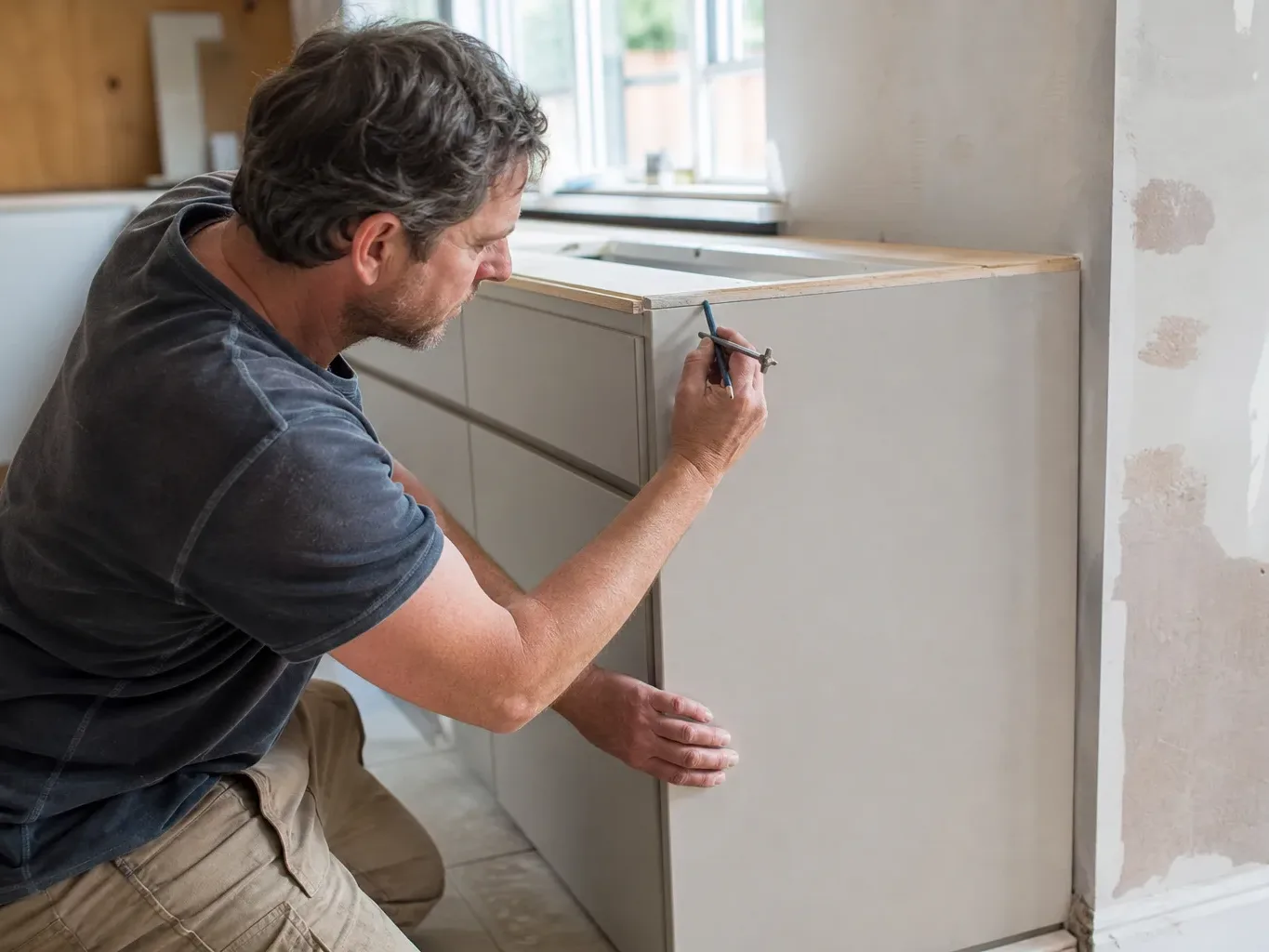
Open-plan reconfigurations or extensions push costs further. A large or complex kitchen fit-out takes 2–4 weeks, compared with the 5–10 days typical for a small to medium kitchen with no structural elements.
What Drives the Final Price
Several factors pull costs up or down independently of the kitchen brand you choose.
Labour and Day Rates
Kitchen fitters in East Lothian charge £200–£350 per day per tradesperson. A straightforward swap-out of units in an existing layout requires fewer days than a project involving a plumber, electrician, and plasterer working across overlapping stages. Multi-trade days or complex sequencing will sit toward the top of that range.
Always ask for a fixed-price quote for the full fit rather than an open-ended day rate. That protects you if the job runs longer than expected.
Structural Work and Extensions
Removing a load-bearing wall to create an open-plan space adds structural engineer fees, steel beam supply, and making-good costs on top of the kitchen budget itself. In Scotland, single-storey rear extensions of up to 4 metres on a detached property may fall within permitted development, but East Lothian Council should be consulted for your specific site before any work begins.
Extensions and reconfigurations add weeks to the timeline and often require separate trades quotes that sit outside the kitchen supplier's scope.
Worktop Material
Worktop choice is one of the most visible cost levers. Laminate remains the most affordable option and has improved considerably in realism over recent years. Quartz and granite occupy a similar price band at £300–£600 per linear metre installed. Porcelain, at £400–£700 per linear metre, commands a premium because the large-format slabs need specialist cutting equipment to avoid cracking.
Solid wood sits at £150–£350 per linear metre, though it requires regular oiling and is less forgiving near a sink.
Appliances
Appliances are often the single largest variable in a mid-range project. A basic integrated oven, hob, and extractor package runs from roughly £800 to £1,500. Switching to a range cooker, wine fridge, and multi-zone induction hob can easily add £3,000–£6,000 to that figure.
Decide early whether you are supplying appliances separately or buying them through your kitchen fitter, as sourcing them yourself can reduce cost but adds coordination responsibility.
Lead Times and Planning Your Project
Once a kitchen is ordered, expect a 6–12 week delivery window from most UK manufacturers. Bespoke or in-frame styles often run longer. That gap is the right time to arrange trades, confirm delivery access, and finalise any structural preparation.
Reputable suppliers across East Lothian, including those covering Haddington, North Berwick, Dunbar, Musselburgh, Tranent, and Prestonpans, typically offer an initial design consultation free of charge. Confirm this before booking, and use the session to get a written itemised quote rather than a ballpark figure.
Does a New Kitchen Add Value to Your Home?
A well-planned kitchen renovation can add up to 5–10% to a property's resale value, though this is an industry estimate and depends on the local market and the standard of finish. In East Lothian's competitive property market, a dated kitchen can be a genuine barrier for buyers, while a well-fitted mid-range kitchen often pays back a significant proportion of its cost.
Value uplift is most reliable when the kitchen specification matches the property. Fitting a £35,000 bespoke kitchen into a two-bedroom terrace is unlikely to return its full cost at resale.
Checking Installer Credentials
Before committing to any fitter, ask whether they work to the standards of a recognised trade body such as Which? Trusted Traders or the Federation of Master Builders. Workmanship guarantees should be offered in writing; one year is the minimum baseline, and some installers provide longer cover.
Get at least two itemised quotes and compare them line by line rather than headline figure against headline figure. A lower total can conceal excluded costs that reappear as extras once the job is underway.
Frequently Asked Questions
Kitchen Installation Cost per Unit
There is no universal per-unit figure, but as a rough guide, a basic fitted kitchen at the entry level runs £5,000–£10,000 for the whole installation. Dividing that across a typical 10-unit layout gives roughly £500–£1,000 per unit including fitting. Mid-range and premium kitchens cost considerably more per unit once door style, carcass quality, and worktop material are factored in.
Kitchen Installation Costs UK
Across the UK, kitchen installation costs follow similar tiers to East Lothian: entry-level projects run £5,000–£10,000, mid-range full-fits sit at £10,000–£20,000, and premium or bespoke kitchens reach £20,000–£40,000 or beyond. Labour rates vary by region, with fitters in East Lothian charging £200–£350 per day. London and the South East tend to sit at the upper end of day rates nationally.
How Long Does a Kitchen Installation Take in East Lothian?
A small to medium kitchen with no structural work typically takes 5–10 days to install. Larger or more complex projects, particularly those involving open-plan reconfigurations or bespoke cabinetry, usually run 2–4 weeks. Ordering materials promptly matters too, as kitchen delivery after order takes 6–12 weeks from most UK manufacturers.
What Is the Cheapest Worktop Option for a New Kitchen?
Laminate is the most affordable worktop material and is not included in the per-linear-metre figures for stone or timber. Solid wood is the next step up at £150–£350 per linear metre installed, depending on the timber species. Quartz and granite both sit at £300–£600 per linear metre installed, while porcelain slabs are the most expensive option at £400–£700 per linear metre due to specialist fabrication.
Do I Need Planning Permission for a New Kitchen in East Lothian?
A straightforward kitchen replacement with no structural changes does not need planning permission. If you plan a single-storey rear extension, permitted development rules in Scotland allow up to 4 metres on a detached property or 3 metres on other dwelling types, but you should confirm with East Lothian Council before starting any external works as site-specific restrictions can apply.