Porcelain and Ceramic Kitchen Worktops for East Lothian Homes
Why Porcelain Is Gaining Ground in East Lothian Kitchens
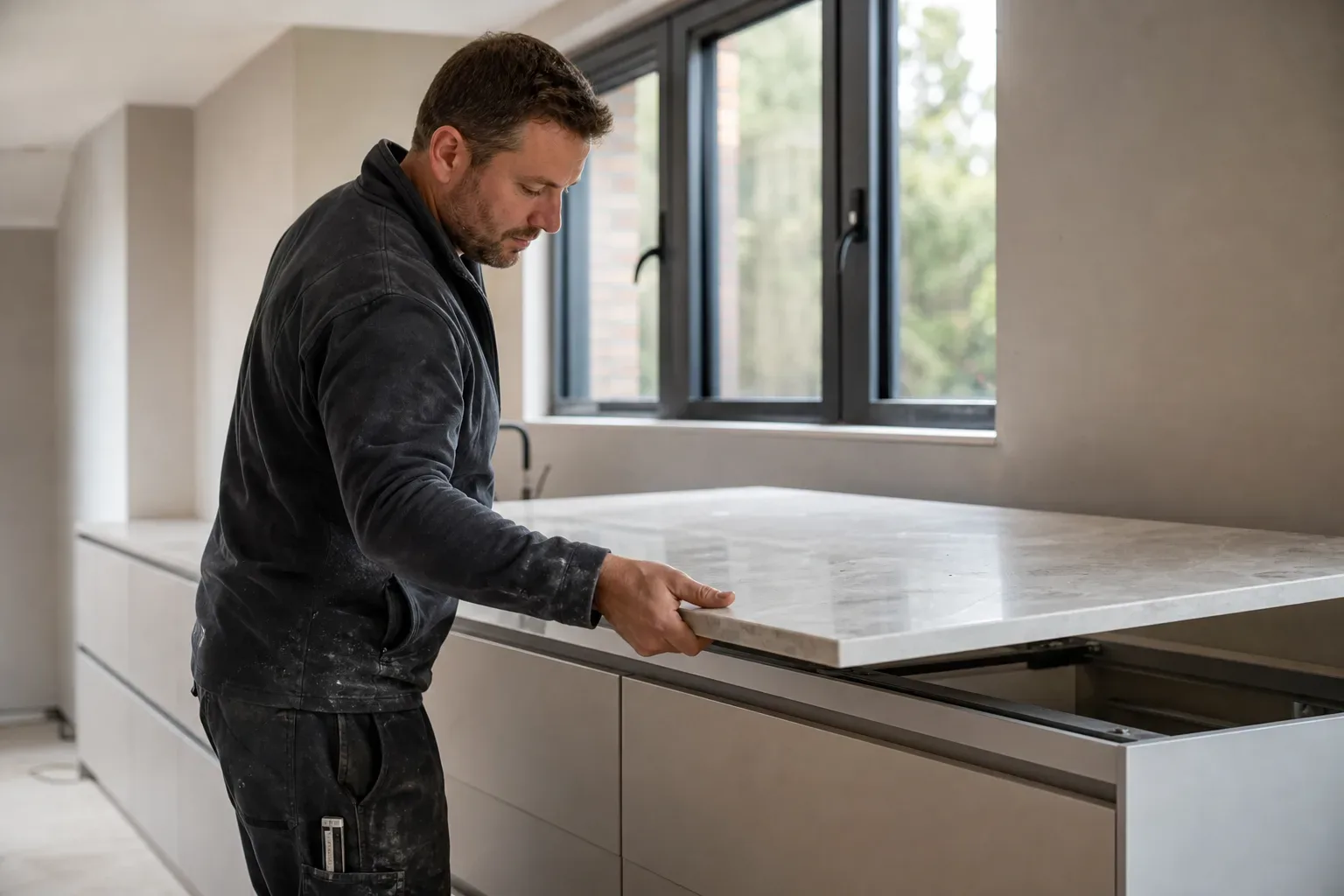
Porcelain kitchen worktops East Lothian homeowners are choosing offer a surface that resists heat, staining, and scratching with very little daily effort. Unlike natural stone, porcelain does not need sealing, and its non-porous structure means bacteria and moisture cannot penetrate the surface. Those are practical advantages that matter in a working kitchen, not just a showroom.
Ceramic worktops use a similar clay-based composition but are fired at lower temperatures, producing a slightly softer surface. Porcelain, fired at higher temperatures, is denser and harder wearing. For a kitchen worktop, porcelain is the more durable choice of the two.
How Porcelain Worktops Are Made
Large-format porcelain slabs are pressed under extreme pressure and fired at temperatures above 1,200°C. The result is a material with very low water absorption, typically below 0.5%, which is what gives it resistance to staining and frost. Most slabs used in kitchens are 6 mm or 12 mm thick, with thicker formats preferred for island overhangs and more substantial edge profiles.
The surface pattern is printed digitally before firing, which allows manufacturers to replicate marble veining, concrete textures, or plain stone effects convincingly. Because the pattern is integral rather than applied as a coating, it does not wear away. Scratching through to a different colour underneath is only a risk on lower-quality products.
Porcelain vs Quartz vs Stone - How They Compare
Heat and Scratch Resistance
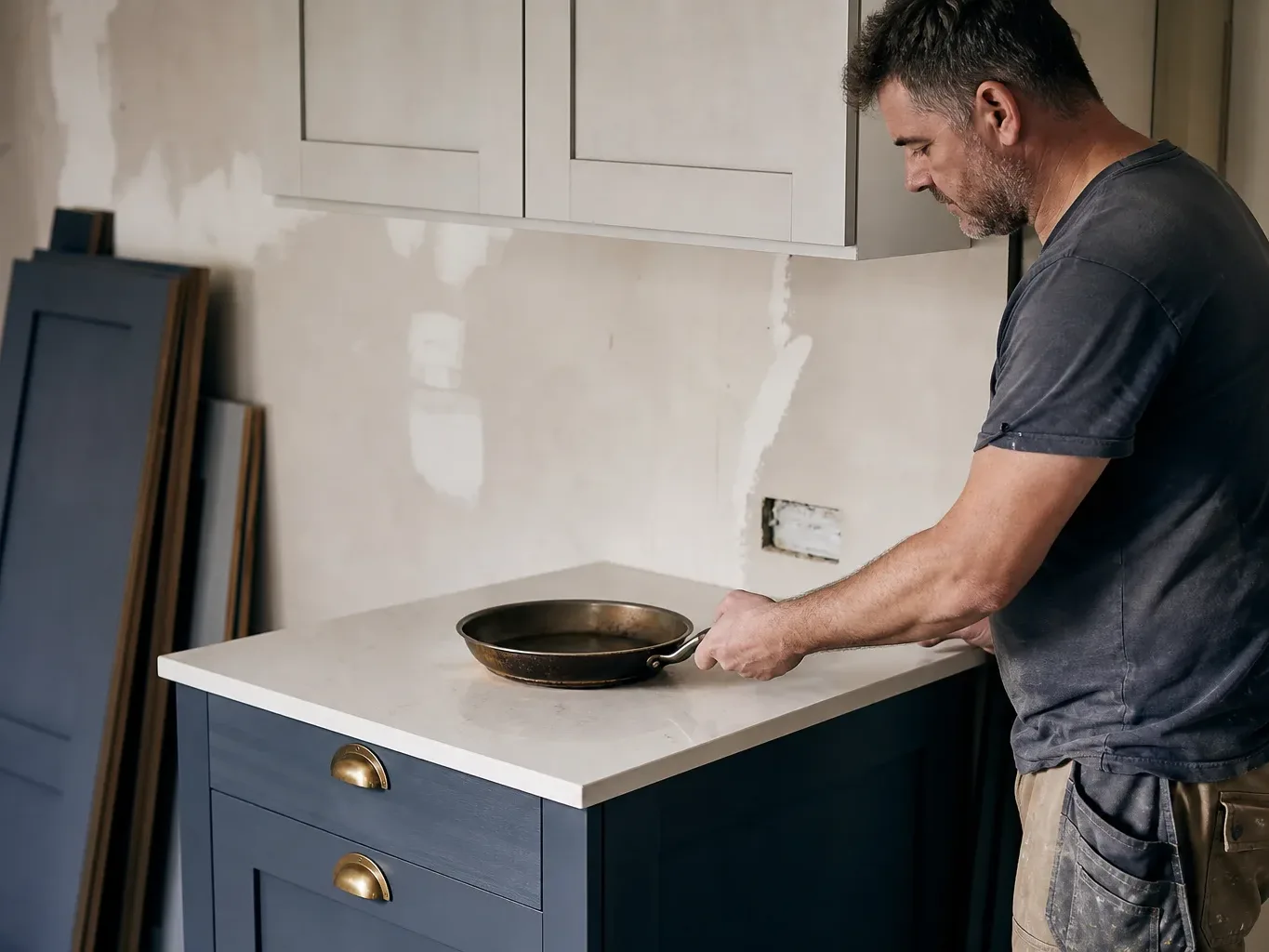
Porcelain tolerates brief contact with hot pans better than most engineered quartz, which can discolour at temperatures above 150°C due to its resin binders. Natural granite and quartzite share porcelain's heat tolerance, but both require annual sealing to stay stain-resistant. A porcelain surface can be wiped clean with a damp cloth after a spilled sauce without any concern about long-term marks.
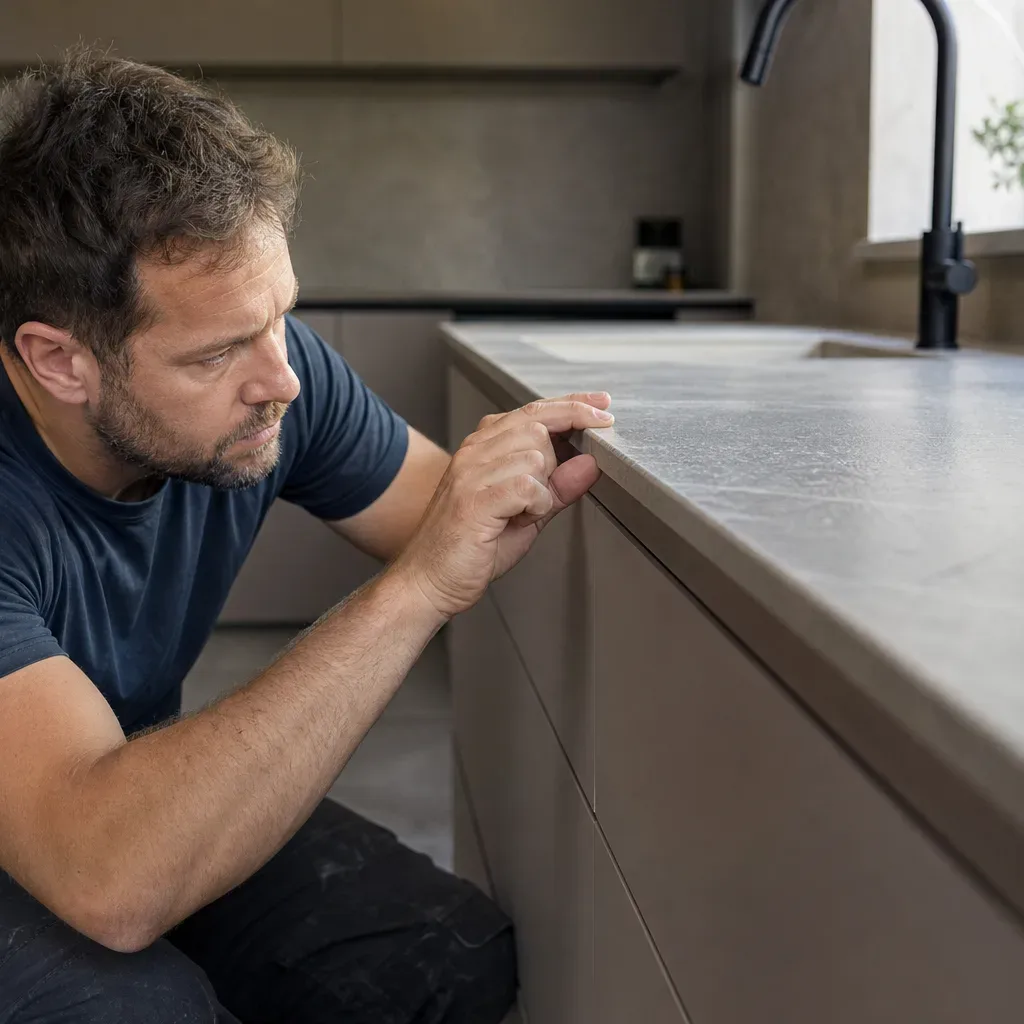
Scratching is a more nuanced picture. Porcelain scores very high on the Mohs hardness scale, around 6–7, meaning everyday utensils will not mark it. However, the material is brittle and can chip on edges if struck sharply. Choosing a bullnose or bevelled edge profile reduces chipping risk compared with a sharp square edge.
Cost Comparison
Installed quartz worktops in East Lothian typically run £300–£600 per linear metre. Solid wood sits at £150–£350 per linear metre depending on species. Porcelain worktops, because of the specialist fabrication and cutting equipment required, sit at £400–£700 per linear metre installed. That premium reflects real processing costs: porcelain cannot be cut with standard stone tools without risking cracking, so fabricators need water-jet or diamond-tipped CNC machinery.
The total spend for a kitchen worktop run depends heavily on the layout. A standard galley kitchen with four to five linear metres of worktop could therefore fall anywhere between £1,600 and £3,500 for porcelain, depending on edge details and cutouts for sinks and hobs.
Slab Sizes, Formats, and Edge Options
Slab Dimensions
Most manufacturers supply slabs at 3,000 × 1,500 mm, which covers the majority of domestic kitchen runs without a join. Some suppliers offer 3,200 × 1,600 mm formats. Fewer joins mean fewer opportunities for moisture to track underneath the surface at junctions, which is a genuine long-term benefit rather than just an aesthetic one.
Thicker slabs at 20 mm can be mitred at the edge to give the appearance of a 40 mm slab without the added weight. This laminated edge detail is common on islands where a more substantial visual presence is wanted.
Edge Profiles
Because porcelain is harder to work than granite, the range of available edge profiles is narrower. Square, bevelled, and bullnose are standard. Ogee and pencil-round profiles are available from specialist fabricators but add to cost and lead time. Discuss edge options with your fabricator before finalising the order, as not every profile suits every thickness.
Practical Considerations for Installation
Lead Times and Fitting
Ordering a fitted kitchen in the UK typically involves a 6–12 week lead time from the manufacturer. Porcelain worktops are often fabricated separately from the cabinet supply and need to be templated after the carcasses are in place. Allow at least two to three weeks between cabinet installation and worktop fitting.
Installation of porcelain worktops requires a fabricator with the right cutting equipment rather than a general kitchen fitter working alone. Some kitchen companies in East Lothian coordinate this end to end; others hand off to a specialist stone and porcelain merchant. Confirm which model applies before you sign off the project plan.
Weight and Cabinet Support
A 12 mm porcelain slab weighs roughly 30 kg per square metre. Cabinets need to be level and fully secured before templating. Any flex in the unit structure can cause stress fractures in the slab over time. This is particularly relevant for peninsula and island configurations, where the unsupported overhang should not exceed what the fabricator specifies, typically 150–200 mm for 12 mm material without additional bracing.
Sink and Hob Cutouts
Cutting apertures for undermount sinks and hob frames demands precision. The brittleness that makes porcelain chip-resistant on the surface also means that a poorly executed cutout can crack the slab. Specify who is responsible for cutouts in your quote and confirm they have done this work in porcelain before, not just in quartz or granite.
Colours, Patterns, and Design Choices
The digital printing process gives porcelain manufacturers access to a wide range of finishes. Marble-effect slabs in Calacatta and Statuario patterns are among the most requested, partly because they offer the visual warmth of real marble without the maintenance demands. Concrete-effect and plain-white matte finishes suit more minimal kitchen schemes and tend to be more forgiving of fingerprints than polished surfaces.
For East Lothian homes with period features, a stone-look porcelain in warmer tones can complement original cornicing or timber flooring without competing with it. Cooler greys work well in contemporary open-plan extensions. Matte finishes feel less clinical than polished and hide minor surface marks from daily use.
Maintenance and Longevity
Day-to-day cleaning requires nothing more than warm water and a mild detergent. Avoid abrasive scourers, which can dull the surface finish over time even on a hard material. Acidic cleaners are not a concern for porcelain the way they are for marble, but they are unnecessary in any case.
Porcelain does not need sealing at installation or at any point during its life. That is a meaningful cost and time saving over natural stone, which typically needs resealing every one to three years depending on use. With correct installation and reasonable care, a porcelain worktop should remain in serviceable condition for twenty years or more without significant intervention.
Frequently Asked Questions
What Are Porcelain Kitchen Worktops?
Porcelain kitchen worktops are large-format slabs made from clay pressed under high pressure and fired above 1,200°C, producing a dense, non-porous surface. They resist heat, staining, and scratching better than many alternatives and require no sealing. The surface pattern is printed digitally before firing, allowing realistic stone and marble effects without the upkeep of natural stone.
How Much Do Porcelain Worktops Cost Installed in East Lothian?
Installed porcelain worktops in East Lothian typically cost £400–£700 per linear metre. The higher end of that range reflects complex edge profiles, larger slab formats, or difficult cutouts for undermount sinks and hobs. A standard galley kitchen with four to five linear metres of worktop could therefore cost between roughly £1,600 and £3,500 in total.
Are Porcelain Worktops Better Than Quartz?
Porcelain tolerates heat better than engineered quartz because it contains no resin binders that can discolour at high temperatures. Both are highly stain-resistant, but porcelain requires no sealing whereas some quartz manufacturers recommend periodic treatment. Quartz edges are generally easier to profile and less prone to chipping, so each material has a trade-off depending on how the kitchen is used.
Can Porcelain Worktops Chip or Crack?
Porcelain is hard but brittle, so sharp impacts on edges can cause chipping. Choosing a bullnose or bevelled edge profile reduces this risk compared with a square edge. Cracking is most likely to occur during fabrication or if cabinets are not fully level before the slab is fitted, which is why professional installation with the correct cutting equipment is essential.
How Long Do Porcelain Kitchen Worktops Last?
With correct installation and routine cleaning, a porcelain worktop should remain in good condition for twenty years or more. The surface does not need sealing at any point, and its non-porous structure means staining and bacterial build-up are not long-term concerns. The main risks to longevity are edge chipping from impact and stress fractures from unsupported overhangs or uneven cabinet bases.