Plumbing and Electrical Considerations for East Lothian Kitchen Installations
Why These Two Trades Determine Your Project Timeline
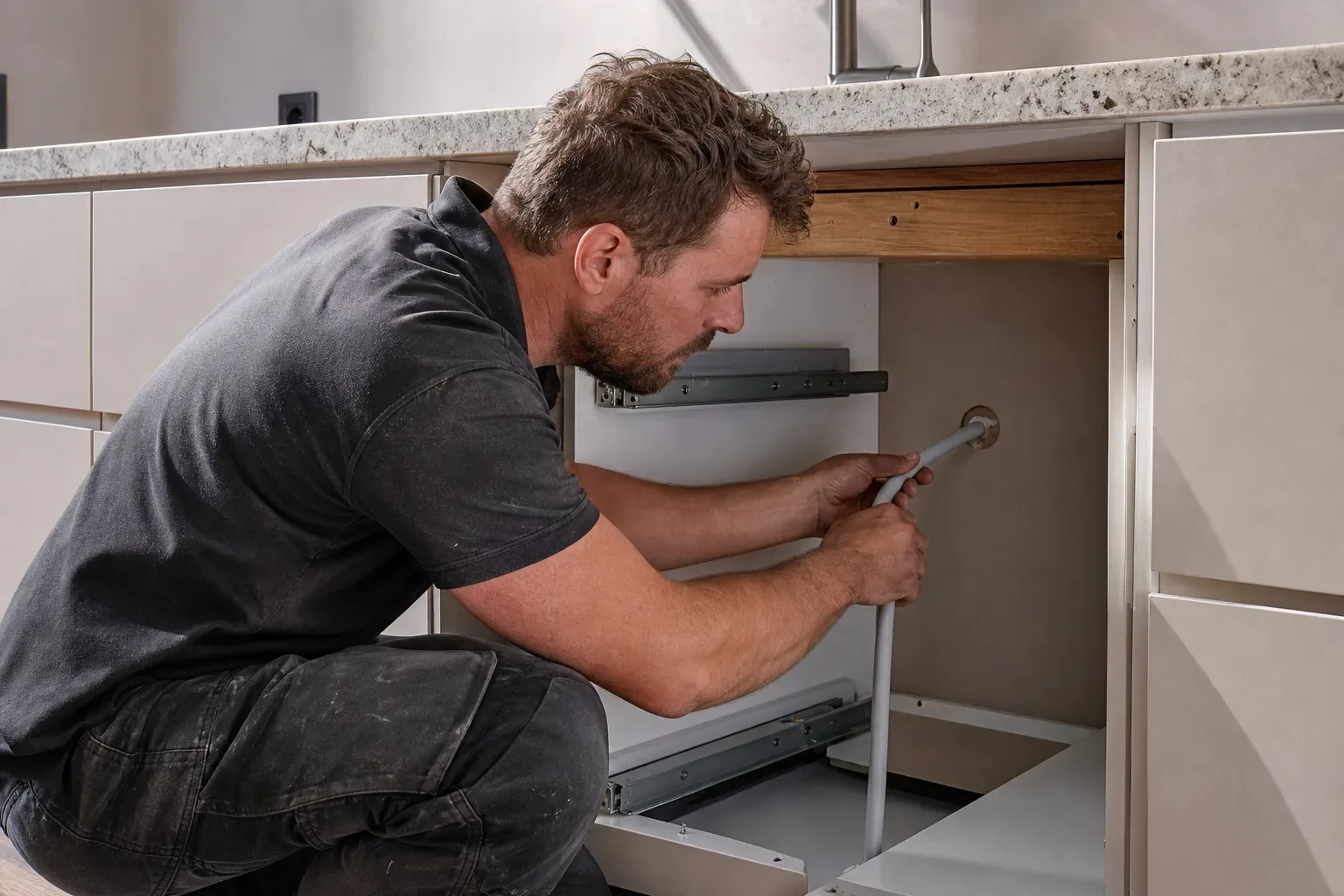
Plumbing and electrical work sit at the heart of any kitchen refit, and they are almost always the trades that dictate when your new units can go in. A kitchen fitter in East Lothian typically charges £200–£350 per day, but if a plumber or electrician has not completed first-fix work before the cabinets arrive, that fitter's day rate becomes dead money. Sequencing these trades correctly is not a matter of preference; it is a project management essential.
Most kitchen installations across East Lothian take 5–10 days for a small to medium space, rising to 2–4 weeks where structural changes or open-plan reconfigurations are involved. Plumbing and electrical first-fix work needs to happen before cabinetry is installed, and second-fix (final connections, sockets, and appliances) happens once the units are in place. Planning both phases in advance keeps that 5–10 day window realistic.
First-Fix Plumbing - What Happens Before the Units Go In
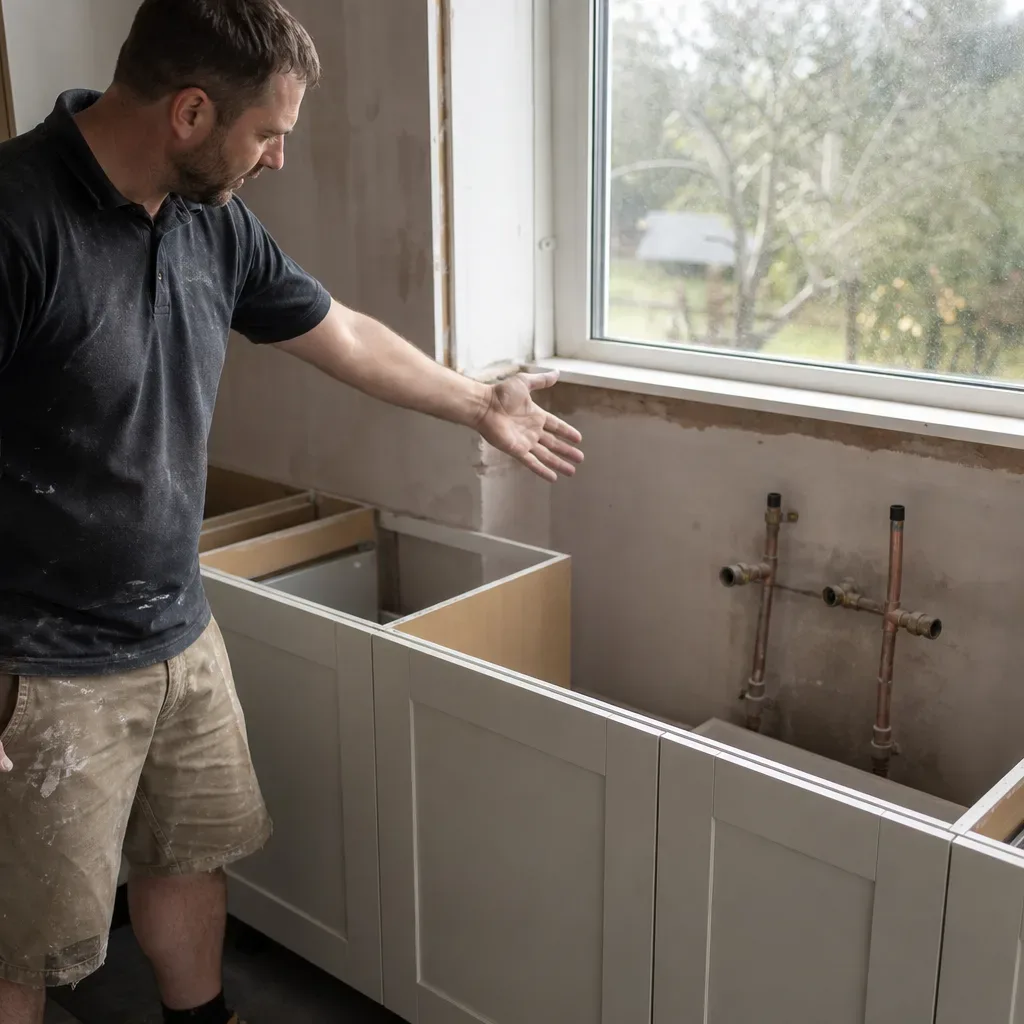
First-fix plumbing covers everything concealed within walls and floors: supply pipes for hot and cold water, waste runs, and any gas pipework if you are moving a hob or range. In older East Lothian properties, particularly stone-built or Victorian-era terraces in Haddington or Musselburgh, original copper pipework may be in good condition but routed inconveniently for a modern kitchen layout. Rerouting those runs during first-fix adds cost but avoids far more disruptive work later.
Waste pipe falls require careful planning. Building regulations in Scotland specify minimum gradients for drainage, and in kitchens where the sink is moving position, achieving the right fall within a tight floor void can be the difference between a clean install and a slow-draining sink. A Gas Safe registered engineer must handle any gas pipe alterations; this is non-negotiable and not something a general plumber can undertake without the specific registration.
Boiler and Heating Pipework Considerations
If your refit involves relocating a boiler or altering radiator positions, that work needs to be scoped and priced separately. Combi boilers are common across East Lothian homes, and moving one even a short distance involves draining the system, extending or rerouting the flue, and recommissioning. Factor in an extra two to three days for a boiler relocation alongside a kitchen install.
Electrical First-Fix and the Regulations That Govern It
Kitchen electrical work in Scotland falls under Part P of the Building Regulations as applied through the Scottish Building Standards. All new kitchen circuits, and any significant alterations to existing ones, must be carried out by a qualified electrician and certified. Your electrician should provide a completion certificate upon finishing; without it, you may face complications when selling your property.
First-fix electrical work includes running new cable routes for dedicated circuits. A standard kitchen requires a minimum of one dedicated circuit for a double oven or range cooker, a separate circuit for a hob (if electric or induction), and a circuit for the refrigeration appliances. Additional circuits for dishwashers and washing machines are standard practice. Attempting to share these loads on existing ring mains is the single most common electrical error in DIY kitchen refits.
Socket Positioning and the 300 Mm Rule
Scottish Building Standards specify that sockets must not be located within 300 mm horizontally of a sink or hob. This matters practically because it affects where you can position appliances like kettles, toasters, and food processors on a worktop. Plan socket positions at the design stage, not after cabinets are in. Moving a socket once tiles are on and units are fitted means unnecessary additional cost.
For a typical East Lothian kitchen, electricians recommend a minimum of six double sockets above worktop level, plus dedicated switched spurs for the dishwasher and washing machine if those appliances are integrated. USB-A and USB-C outlets have become standard in new builds and renovations throughout the area, and they are straightforward to include during first-fix at negligible extra cost.
Extractor Fans and Ventilation Requirements
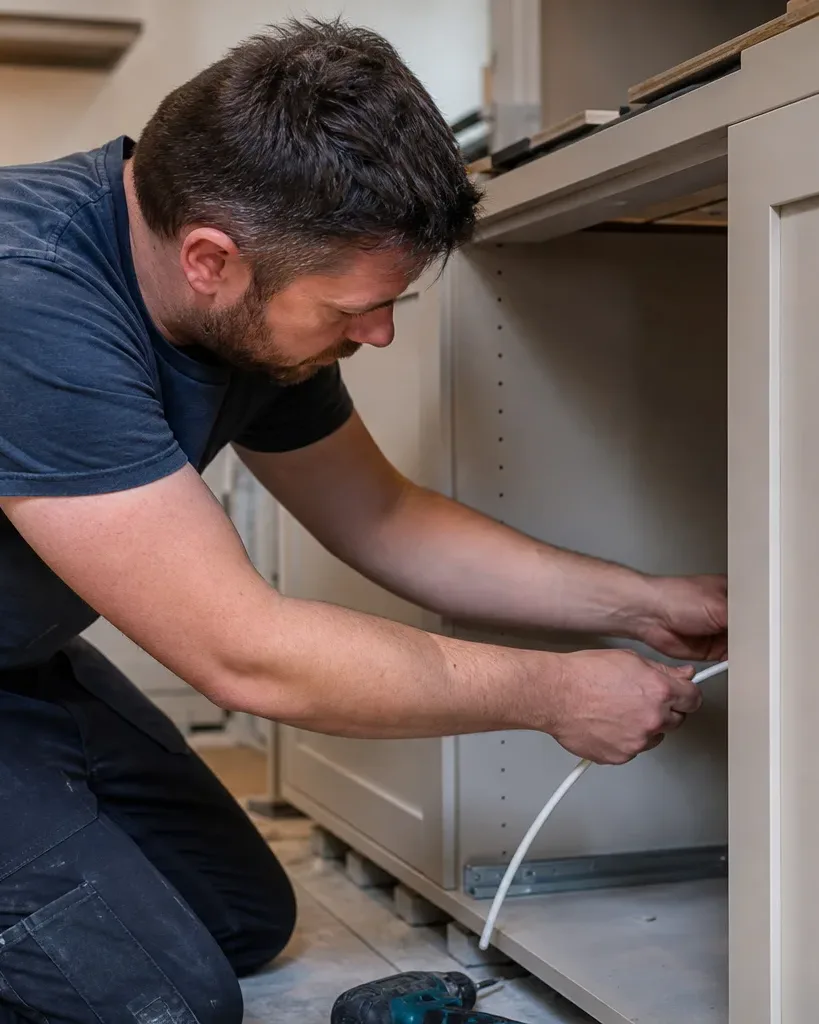
Kitchen ventilation is covered by Scottish Building Standards Section 3 (Environment), which requires mechanical extraction capable of a minimum air flow rate for kitchens. Ducted extraction directly to an outside wall or roof is always preferable to recirculating models, which filter grease but return moisture to the room. In tightly insulated modern homes, inadequate ventilation contributes directly to condensation and mould issues.
Routing a duct from an island or peninsula hob to an external wall often requires cutting through a structural element or floor. In conservation areas of North Berwick or the historic centre of Haddington, external duct grilles may require prior consent from East Lothian Council's planning department. Check this at design stage rather than after the hole is cut.
How to Coordinate Trades Without Causing Delays
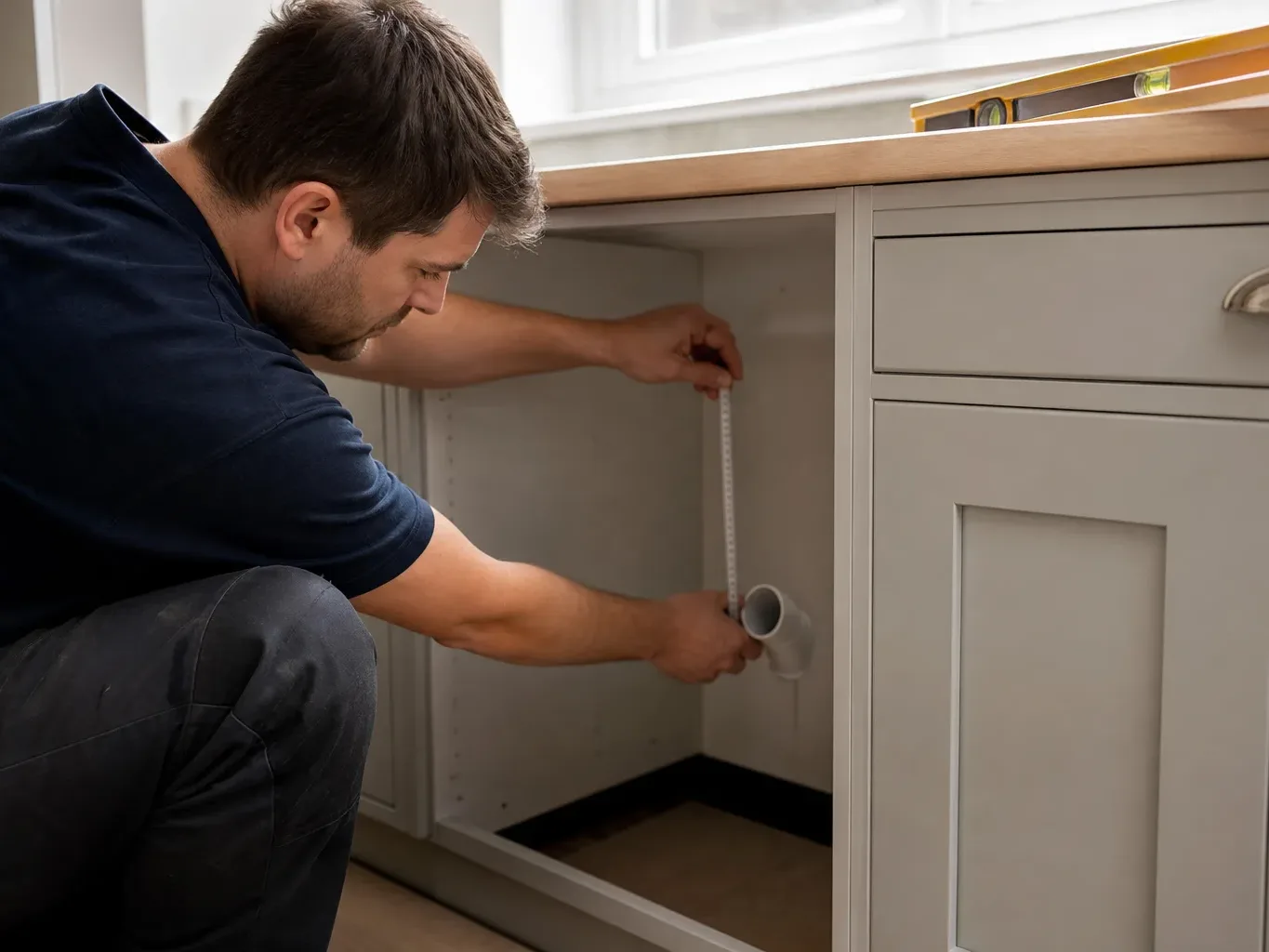
The most practical approach is to appoint a single point of contact, either a project manager or a kitchen company that coordinates trades directly. Many East Lothian kitchen suppliers operate this way as part of a full-fit service. If you are managing trades yourself, confirm the following sequence before any work begins: structural alterations first, then first-fix plumbing and electrical together, then plastering and drying time (typically 5–7 days for plaster to cure sufficiently), then cabinet installation, then second-fix plumbing and electrical.
Allowing insufficient drying time after plastering is a frequent cause of cabinet damage. Freshly plastered walls in a kitchen environment hold significant moisture, and fitting cabinets directly against them traps that moisture against the cabinet backs. A week of ventilated drying is a minimum; two weeks is safer in older stone properties common across East Lothian.
Getting Quotes and Checking Credentials
For plumbing, confirm your tradesperson is registered with the Scottish and Northern Ireland Plumbing Employers' Federation (SNIPEF) or equivalent. For electrical work, look for membership of NICEIC, SELECT (the Scottish electrical trade body), or equivalent approved certifier schemes. Gas work requires Gas Safe registration without exception. Working with tradespeople who hold recognised credentials also aligns with using kitchen installers who work to standards of recognised bodies such as Which?
Trusted Traders or the Federation of Master Builders.
Always obtain at least two quotes for each trade. Day rates across East Lothian sit at £200–£350 per tradesperson, but a complex kitchen electrical rewire or a full plumbing reroute will typically be priced as a fixed job rather than a day rate. A fixed price protects you if the work takes longer than estimated.
Costs to Build Into Your Budget
Electrical first-fix for a standard kitchen refit in East Lothian, including new circuits, consumer unit amendments, and first-fix sockets and switches, typically runs £800–£1,500 depending on the extent of rewiring required. Second-fix electrical, covering final socket fitting, appliance connections, and certification, adds a further £300–£600. Plumbing first-fix for a sink relocation with new waste runs costs roughly £400–£900; more complex rerouting of supply pipes or adding a dishwasher point from scratch will push that higher.
These figures sit alongside the broader kitchen installation budget: entry-level full-fit kitchens in East Lothian run £5,000–£10,000, mid-range projects £10,000–£20,000, and premium or bespoke installations £20,000–£40,000 or more. Plumbing and electrical are almost always included within full-fit packages but itemised separately in supply-only arrangements where you coordinate trades yourself. Clarify this distinction with your kitchen company before signing anything.
Frequently Asked Questions
What Are the Kitchen Electrical Installation Regulations in Scotland?
Kitchen electrical work in Scotland is governed by the Scottish Building Standards, which incorporate requirements broadly equivalent to Part P in England. All new circuits and significant alterations must be carried out by a qualified electrician registered with an approved certifier scheme such as SELECT or NICEIC, and a completion certificate must be issued on finishing. Kitchens require dedicated circuits for ovens, hobs, and refrigeration appliances, and sockets must be positioned at least 300 mm horizontally from any sink or hob.
Do I Need a Gas Safe Engineer for Kitchen Plumbing in East Lothian?
Yes. Any work involving gas pipework, including moving a gas hob, relocating a boiler, or extending a gas supply, must be carried out by a Gas Safe registered engineer. A general plumber or kitchen fitter cannot legally undertake gas work without that specific registration. Always ask to see the engineer's Gas Safe ID card before work begins.
How Long Does Plumbing and Electrical First-fix Take Before Cabinets Can Be Fitted?
For a typical East Lothian kitchen refit, plumbing and electrical first-fix together usually takes two to four days, assuming no major rerouting of pipes or significant consumer unit upgrades are required. After first-fix, any new plastering needs at least five to seven days to dry before cabinets are fitted against it. The total installation window for a small to medium kitchen, including all trades, is typically 5–10 days.
What Ventilation Is Legally Required in a Kitchen?
Scottish Building Standards Section 3 (Environment) requires mechanical extraction in kitchens, with minimum air flow rates specified for the room size. Ducted extraction direct to outside is strongly preferred over recirculating models. If your kitchen is in a conservation area or a listed building, for example in parts of North Berwick or central Haddington, routing an external duct grille may require approval from East Lothian Council before work proceeds.
What Is the Typical Cost of Plumbing and Electrical Work in an East Lothian Kitchen Refit?
Electrical first-fix for a standard kitchen refit, covering new dedicated circuits, consumer unit amendments, and socket and switch positioning, typically costs £800–£1,500. Second-fix electrical adds roughly £300–£600. Plumbing first-fix for a sink relocation with new waste runs runs approximately £400–£900, with more complex pipework rerouting costing more. These figures are separate from the main kitchen installation cost, which ranges from £5,000–£10,000 at entry level to £20,000–£40,000 or more for premium projects.