Shaker Kitchen Designs Popular in East Lothian Cottages
Shaker kitchens have been fitted into East Lothian cottages for decades, and their staying power is no accident. The style's defining features, recessed-panel doors, simple rail-and-stile frames, and clean proportions, complement the low ceilings, stone walls, and uneven floor plans that characterise older properties from Haddington to Dunbar. Where ornate door styles can feel at odds with a 19th-century farmhouse or a fisherman's cottage in North Berwick, Shaker cabinetry sits quietly and lets the architecture lead.
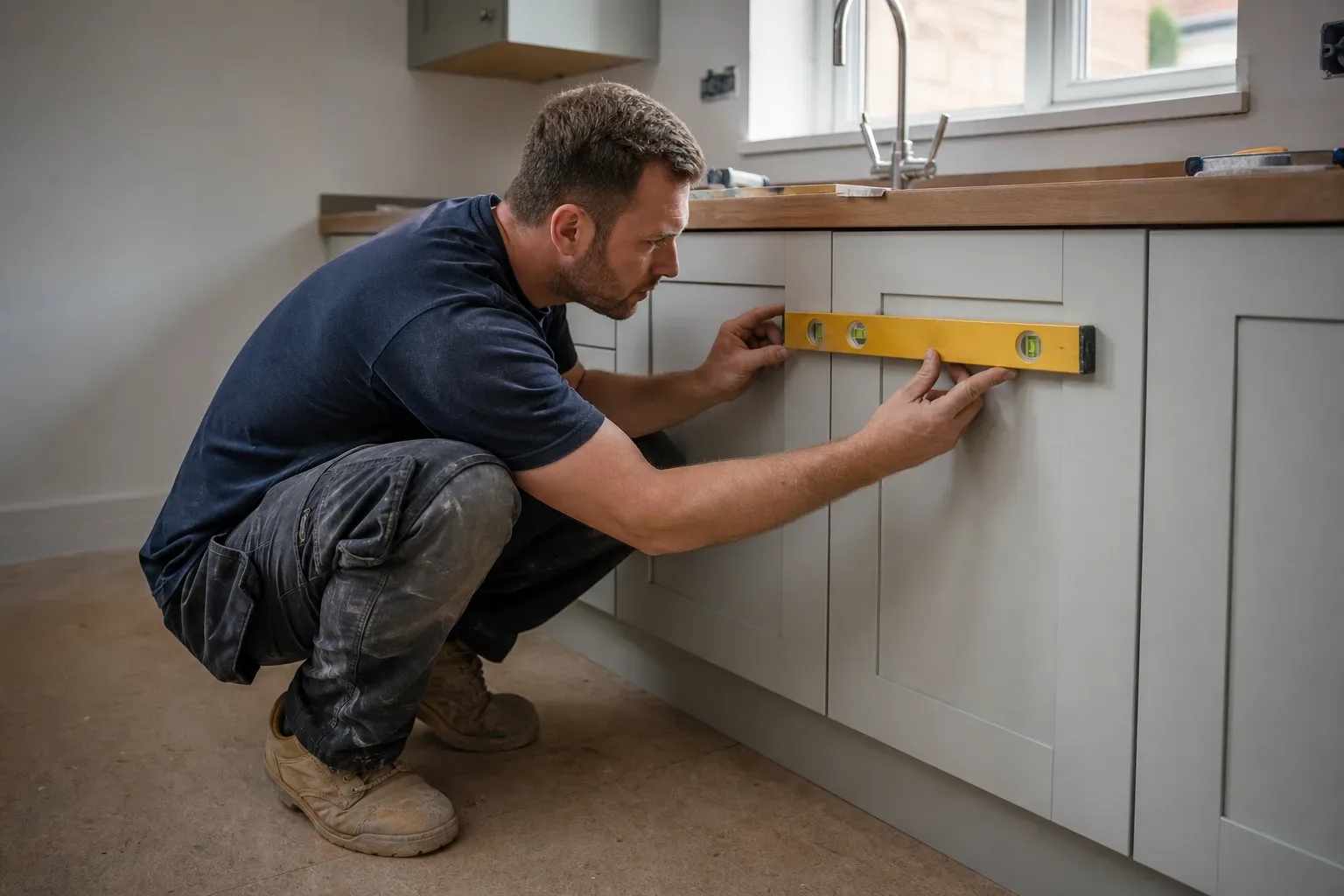
Why Shaker Style Suits Scottish Cottage Interiors
Scottish vernacular buildings are typically modest in decoration. The walls do the work, whether that is harled render, sandstone ashlar, or exposed rubble pointing. A kitchen design that competes with that texture tends to look busy and overwrought. Shaker doors, with their single flat panel set into a square frame, provide just enough visual structure without adding noise.
Practical durability also matters. Cottages in East Lothian are often older properties with imperfect wall reveals and irregular openings. Shaker cabinets are available from most UK manufacturers in a wide range of widths, and their solid or MDF-core construction handles the kind of minor flex and settlement movement that older buildings can introduce over time.
The Role of Colour in Cottage Kitchens
Colour choice is where Shaker kitchens either succeed or look generic. Muted, chalky tones drawn from the landscape tend to read well in stone-built cottages: warm off-whites, soft sage, deep navy, and slate grey all reference materials already present in East Lothian's coastal and agricultural settings. Bright whites can look clinical against aged flagstone floors; heritage greens or dusty blues tend to bridge old and new more convincingly.
Two-tone schemes, where base cabinets sit in a darker tone and wall cabinets are painted out lighter, are particularly effective in low-ceilinged rooms because they draw the eye downward rather than highlighting height constraints. Matching the door colour to the window trim or skirting boards creates a sense of coherence that is difficult to achieve with contrasting finishes.
Worktops That Work with Shaker Cabinetry
Material selection at worktop height shapes how traditional or contemporary the final room feels. Solid wood is the most historically resonant choice and works well with painted Shaker doors. Installed oak or hardwood worktops typically cost £150–£350 per linear metre depending on species and profile. The warmth of timber counters the flatness of a painted door face and adds the kind of patina that improves with age in a cottage setting.
Quartz and granite are also popular. Installed quartz in East Lothian runs £300–£600 per linear metre, and lighter-veined options pair cleanly with sage or off-white cabinetry. Porcelain slab worktops sit at £400–£700 per linear metre installed; they require specialist fabrication but offer a thinner profile that suits more contemporary interpretations of the Shaker style.
Hardware and Handles
Handle choice carries more visual weight than most homeowners expect. Traditional cup-pull handles in brushed brass or aged bronze reinforce a heritage feel and are a practical choice on painted doors where grip marks accumulate near the edge. Ceramic knobs in white or bone are a lower-cost alternative that references the Shaker movement's original aesthetic.
Handleless or push-to-open configurations can work within a Shaker framework, but they tend to push the design toward a more contemporary reading. In a cottage with original features intact, some visible hardware usually makes better sense.
Fitting a Shaker Kitchen in an Older Property
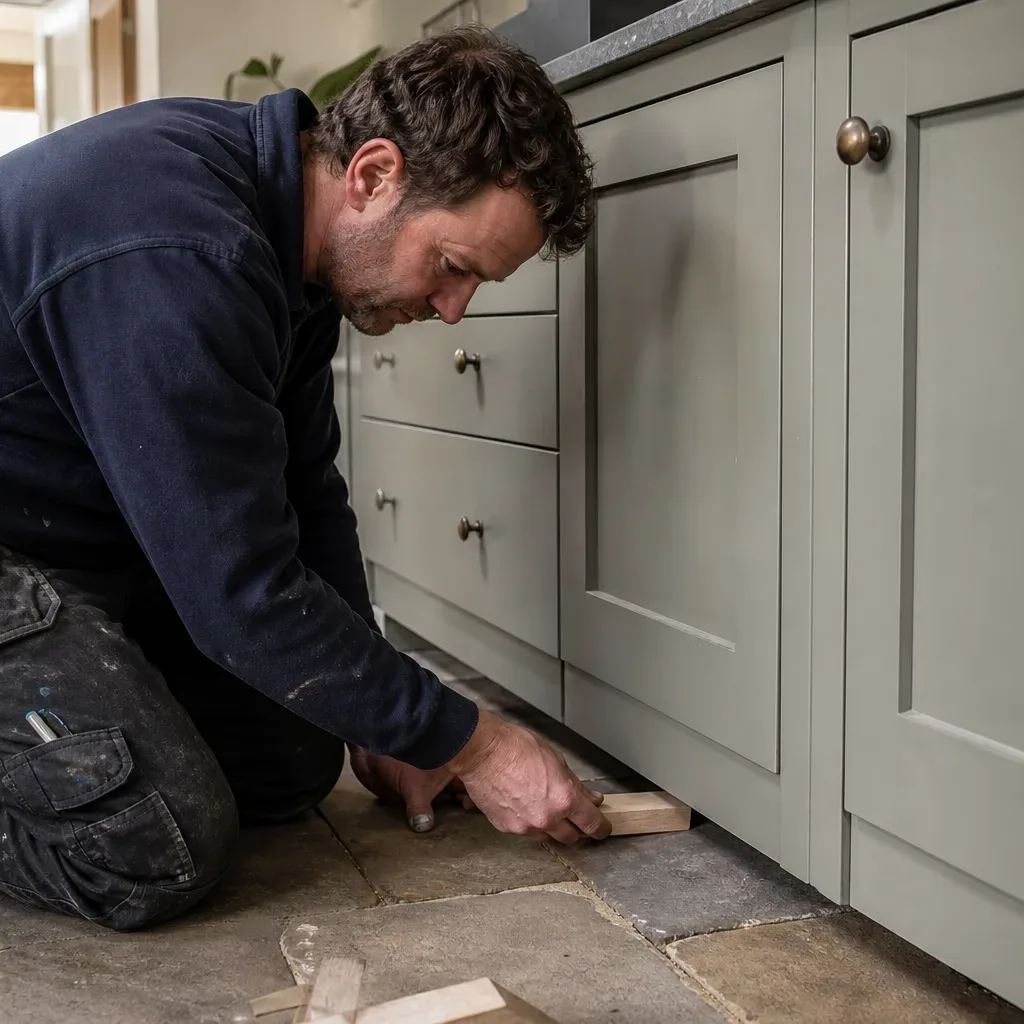
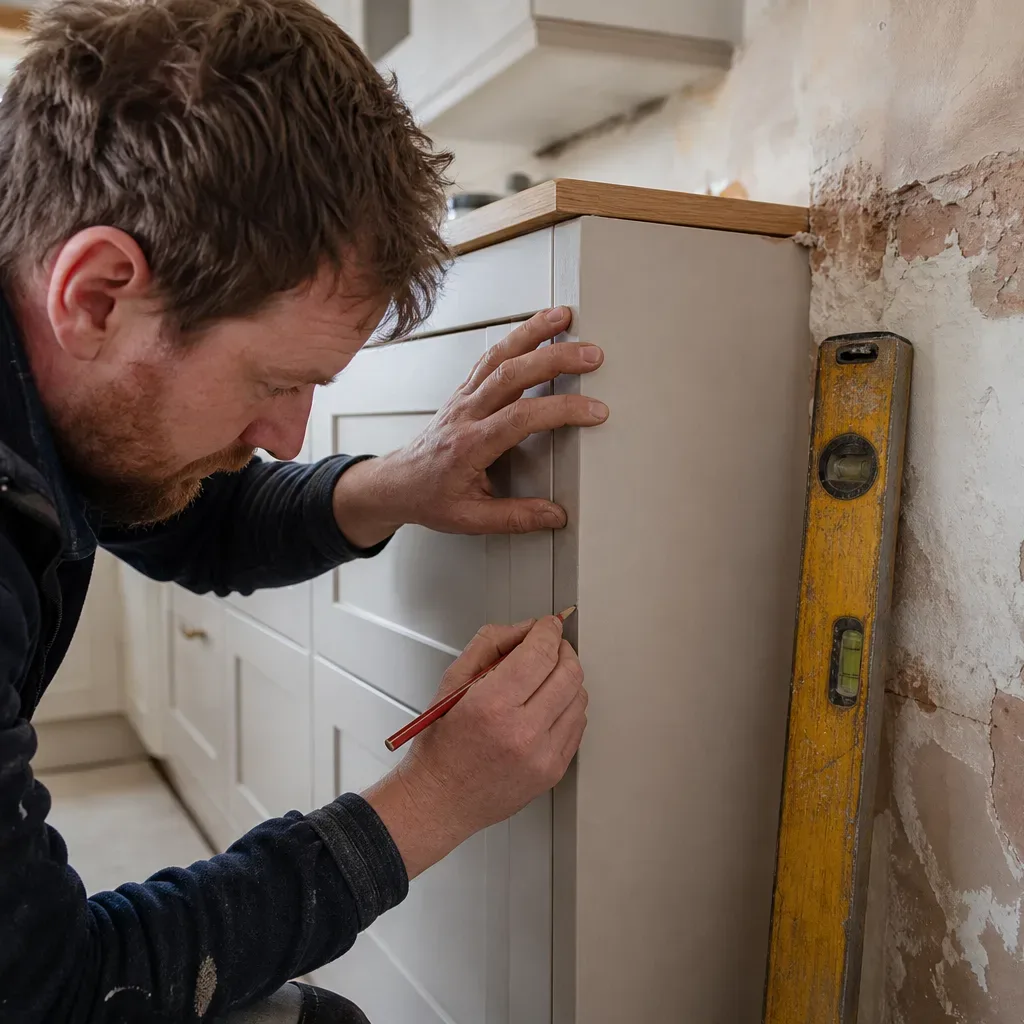
Cottage renovations almost always surface complications. Floors are rarely level, walls are rarely plumb, and service routes for plumbing and electrics are seldom where you would choose to put them. Experienced kitchen fitters working in East Lothian properties charge £200–£350 per day per tradesperson, and complex installations in older buildings often take longer than comparable work in a newer house.
A small to medium kitchen typically takes 5–10 days from demolition to final fix. Larger or structurally altered kitchens, particularly where walls are moved or extensions are involved, can run 2–4 weeks. Building in contingency time is sensible when working with properties that have not been opened up before.
Single-storey rear extensions are a common way to create the larger, open-plan kitchen-dining space that many cottage owners want. Under Scottish permitted development rules, a rear extension up to 3 metres (for terraced and semi-detached properties) or 4 metres (for detached dwellings) can proceed without full planning permission, though East Lothian Council should be consulted to confirm the rules for a specific property before work begins.
Lead Times and Planning Ahead
Manufacturer lead times for fitted kitchens typically run 6–12 weeks from order to delivery. Bespoke painted or in-frame Shaker cabinetry sometimes sits at the longer end of that window. Ordering early and scheduling trades in advance is more important in a cottage renovation than in a straightforward replacement project, because discovery works, repointing, re-plastering, or damp treatment, can add weeks to the programme.
Initial design consultations with most reputable East Lothian kitchen suppliers are free of charge. Using that appointment to test colour samples against the actual walls and floor in natural light saves costly corrections later.
Budget Ranges for a Shaker Kitchen
Entry-level Shaker kitchens, using mass-market painted-MDF doors with standard appliances and laminate or timber worktops, fall in the £5,000–£10,000 range for supply and full-fit in East Lothian. That budget suits a straight run or a simple L-shape in a smaller cottage kitchen with no structural changes.
Mid-range projects with better cabinetry, stone or quartz worktops, and quality integrated appliances typically land between £10,000 and £20,000. Premium or bespoke Shaker kitchens, using hand-painted in-frame cabinetry, stone worktops, and high-specification appliances, can comfortably reach £20,000–£40,000 or beyond. A well-planned kitchen renovation of this kind can add an estimated 5–10% to a property's resale value, which is meaningful in a housing market where East Lothian cottages often command a premium for sympathetically updated interiors.
The widest budget variances in cottage kitchens come not from the cabinetry itself but from the preparatory work: plaster, electrics, flooring, and structural repairs that only become visible once the existing kitchen is out. Getting a thorough survey before finalising the budget reduces the risk of unpleasant surprises mid-project.
Frequently Asked Questions
What Is a Shaker Kitchen Design?
A Shaker kitchen design features cabinet doors built with a square recessed panel set into a rail-and-stile frame. The style originated with the American Shaker movement, which valued simple, functional craftsmanship. In practical terms, it means clean lines, solid construction, and a door profile that suits both traditional and contemporary interiors. Most UK manufacturers offer Shaker-style doors in painted MDF, solid wood, or primed-for-painting options.
Shaker Kitchen Design Cost
In East Lothian, a basic Shaker kitchen with standard appliances and worktops, fully fitted, typically costs £5,000–£10,000. Mid-range projects with stone worktops and better cabinetry run £10,000–£20,000. Premium bespoke Shaker kitchens using hand-painted in-frame cabinetry and high-specification appliances can reach £20,000–£40,000 or more. Cottage renovations often carry additional costs for preparatory work such as plastering, rewiring, or structural repairs.
What Colours Work Best for a Shaker Kitchen in a Scottish Cottage?
Muted, chalky tones tend to suit stone-built Scottish cottages best. Soft sage green, dusty navy, warm off-white, and slate grey all reference materials common in East Lothian's landscape and architecture. Bright white can look clinical against aged flagstone or timber floors. Two-tone schemes with a darker base and lighter wall cabinets work well in rooms with lower ceilings, and matching door colours to existing trim helps tie the space together.
How Long Does It Take to Fit a Shaker Kitchen in an Older Cottage?
A small to medium kitchen typically takes 5–10 days from demolition through to final fix. Larger or more complex projects, particularly those involving structural alterations or open-plan reconfigurations, usually take 2–4 weeks. Cottage renovations often uncover additional work once the existing kitchen is removed, such as damp treatment or re-plastering, so building contingency time into the programme is sensible. Manufacturer lead times for cabinetry add a further 6–12 weeks from order to delivery.
Do I Need Planning Permission to Extend My Cottage Kitchen in East Lothian?
Under Scottish permitted development rules, a single-storey rear extension of up to 3 metres for a terraced or semi-detached property, or up to 4 metres for a detached dwelling, can generally proceed without full planning permission. However, cottage properties may have additional constraints, particularly if they are listed buildings or sit within a conservation area. East Lothian Council should be consulted before work begins to confirm what applies to a specific property.