Worktop Edging and Upstand Finishes - Design Details for East Lothian Kitchens
The edging profile on a worktop and the upstand running along the wall behind it are finishing details most buyers overlook until the cabinets are already in. Getting them right early saves costly remedial work and ties the whole kitchen together visually. Whether you are fitting a laminate worktop in a Tranent terrace or a quartz slab in a North Berwick farmhouse kitchen, these choices affect durability, hygiene, and the room's overall feel.
What Worktop Edging Actually Is
Worktop edging is the profile applied to the exposed front and end edges of a worktop, anywhere the cut substrate would otherwise be visible. On laminate boards, the edge is usually a post-formed curve, a square-cut strip, or a bullnose radius. Stone and porcelain worktops are fabricated with machined profiles: pencil round, eased, bevelled, or ogee are the common options. Each profile changes how light catches the surface and how easy the edge is to keep clean.
Square or eased edges look crisp and suit handleless slab-door kitchens well. Rounded and bullnose profiles are softer, slightly more forgiving in busy family kitchens, and reduce the risk of chipping on harder materials like granite. Ogee profiles are more ornate, traditionally paired with in-frame cabinetry and classic Shaker designs.
Laminate Edge Options
Post-formed laminate worktops are manufactured with the edge already curved, eliminating a visible join at the front. This makes them quick to install and very hygienic. Square-edge laminate boards use a separate matching strip glued and trimmed to the cut face, which is neat but requires careful jointing to resist moisture ingress over time.
For end panels at a run of worktop, a matching laminate strip or an aluminium edging bar is the standard finish. Aluminium edging bars, available in brushed silver, brass-effect, and black, have become popular in East Lothian kitchens influenced by the clean-lined Scandinavian aesthetic that suits both new-builds and converted stone properties.
Stone and Porcelain Edge Profiles
Quartz worktops, installed across East Lothian at roughly £300–£600 per linear metre, are templated on-site and fabricated offsite before delivery and fitting. The edge profile is machined at the fabrication stage, so you must specify it at the point of ordering. A pencil-round edge is the most practical day-to-day: it is smooth enough to wipe clean, resistant to chipping at corners, and unobtrusive enough not to date quickly.
Porcelain slab worktops, priced at £400–£700 per linear metre installed, present a particular challenge at the edges because the material is very dense but brittle at thin cross-sections. Fabricators typically mitre two pieces to create a thicker-looking edge, or they use a return piece bonded underneath. This is specialist work, which partly explains the higher price point for porcelain relative to quartz.
Upstands Versus Full Splashbacks
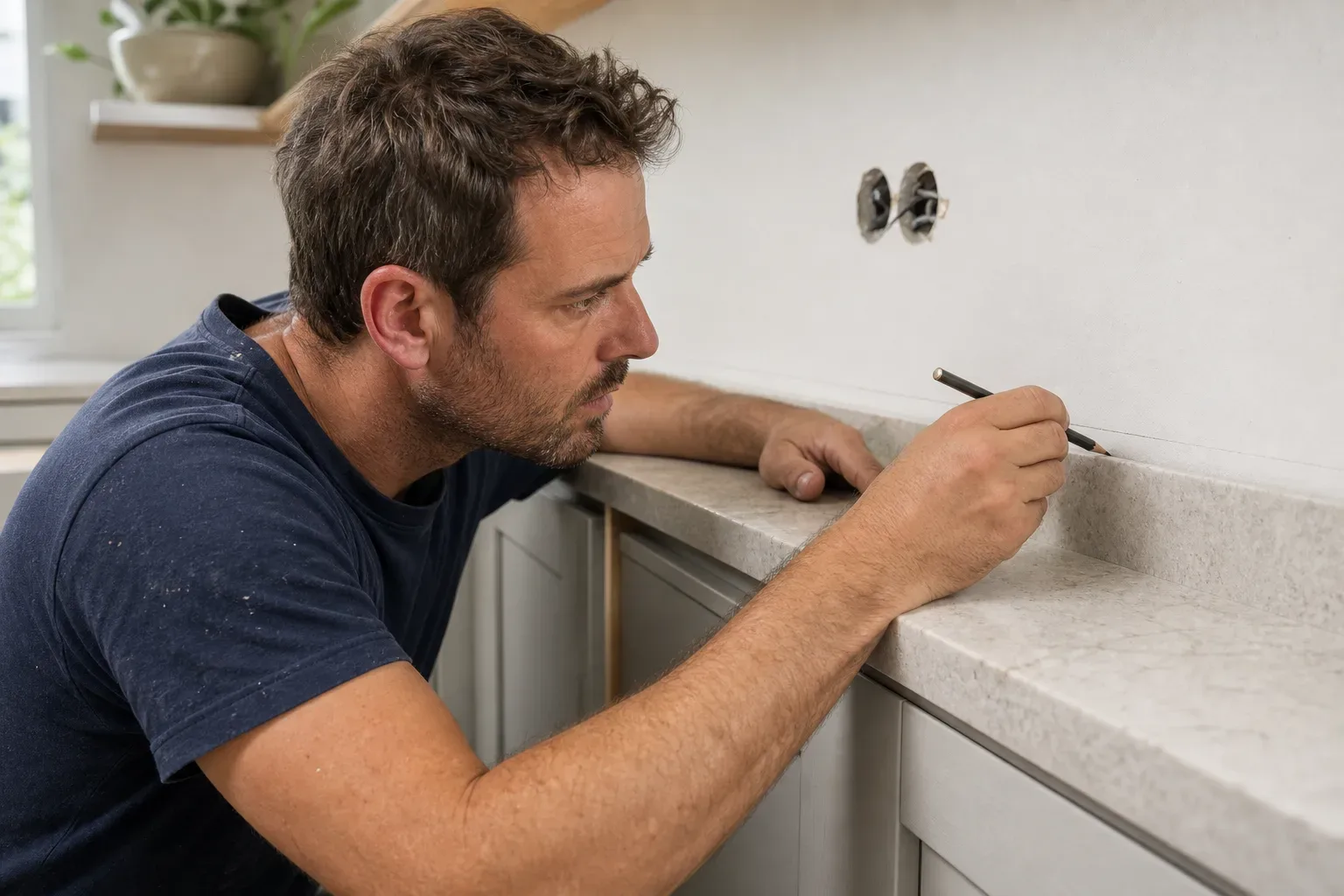
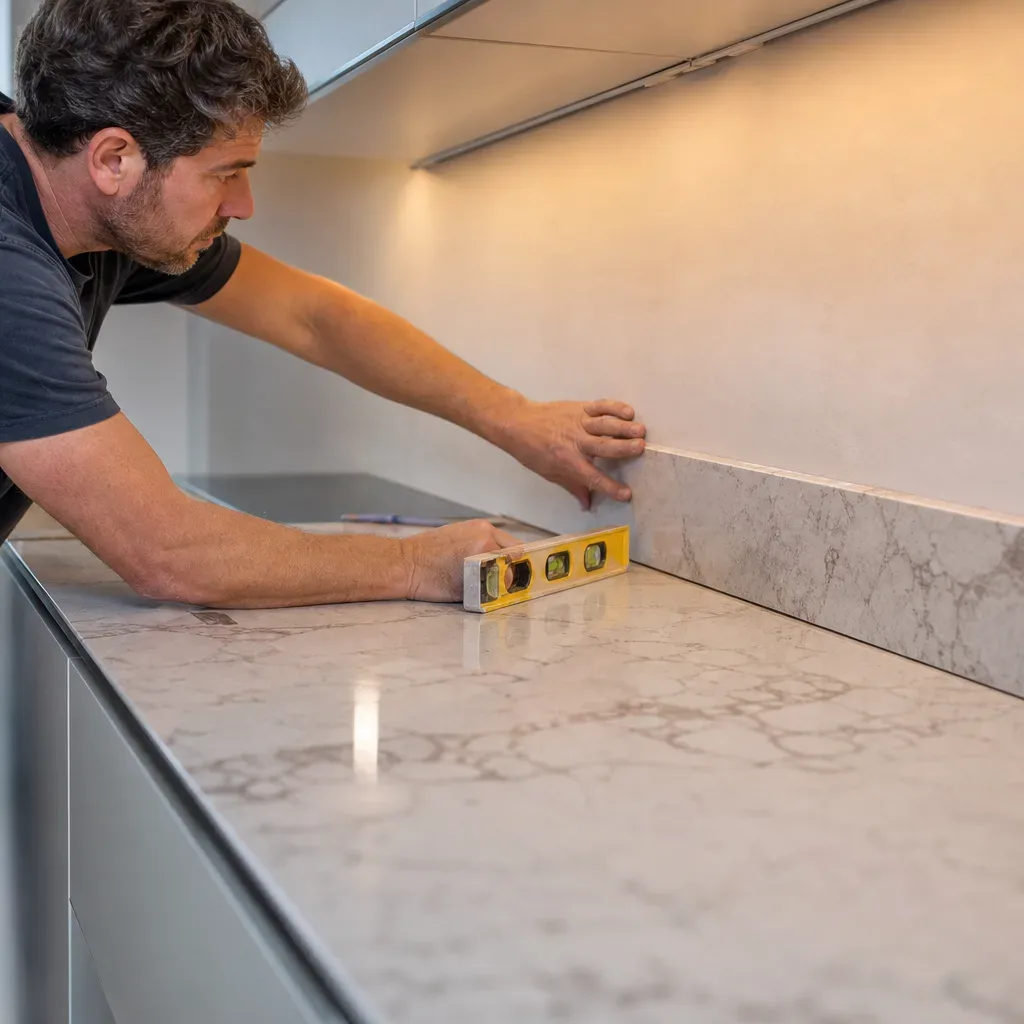
An upstand is a narrow strip of material, typically 100–150 mm tall, fixed directly to the wall at the back of the worktop to seal the gap between the worktop surface and the wall. It is not the same as a full splashback, which runs from worktop to the underside of the wall units and offers more coverage in high-splash zones like behind the hob.
Upstands are cheaper to supply and fit, and they work well along runs of worktop away from the cooker. A full splashback behind the hob, in toughened glass, metro tile, or a matching quartz panel, is the practical choice where grease and steam are a daily reality. Many East Lothian kitchens use both: upstands along the perimeter walls and a full splashback as the design focal point behind the cooking zone.
Matching Versus Contrasting Upstands
Matching the upstand material to the worktop is the most common approach. A quartz worktop with a quartz upstand cut from the same slab gives a seamless, high-end result. Solid wood worktops, fitted at £150–£350 per linear metre, are sometimes finished with a painted or tiled upstand rather than a timber one, because wood against a damp wall behind a sink is more vulnerable than a ceramic or glass alternative.
Contrasting upstands are a deliberate design choice: a white quartz worktop with a dark slate-effect porcelain upstand, for example, or a Silestone surface paired with a hand-painted ceramic tile upstand. East Lothian properties vary enormously in character, from Victorian villas in Musselburgh to modern detached homes in Dunbar, and the right contrast depends as much on the room's architectural detail as on personal taste.
Sealing and Fixing Upstands
The joint between the top of the upstand and the wall, and the joint between the base of the upstand and the worktop, must be silicone-sealed after installation. Silicone allows for minor movement, prevents water from tracking behind the upstand, and keeps the join hygienic. Colour-matched silicone is available and worth specifying: a white silicone bead against a dark worktop reads as a gap even when it is perfectly applied.
For quartz and porcelain upstands, the fixing is usually a combination of adhesive and silicone rather than mechanical fixings. The installer will allow for any slight irregularity in the wall surface, which in older East Lothian stone properties can be considerable.
Practical Decisions for Your Kitchen Project
Specify your edge profile and upstand material at the design stage, not as an afterthought once the worktop is on order. Fabricators need both decisions to produce accurate quotes and cut sheets. Changing a profile after fabrication begins often means reordering, which can add weeks to a lead time that already typically runs 6–12 weeks from order to delivery.
Think about cleaning before you commit to an ornate ogee edge. Grooves and undercuts collect crumbs and grease, and in a working kitchen they need attention every day to stay hygienic. A pencil-round or eased edge on a worktop you will use heavily is usually the smarter choice, even if the ogee looks more impressive in a showroom.
Budgeting for Edging and Upstands
In most full-fit kitchen projects, the cost of profiling and upstands is included within the worktop fabrication quote rather than itemised separately. If you are using a kitchen fitter working at the East Lothian day rate of £200–£350 per tradesperson, upstand fixing is typically a half-day task once the worktops are in, assuming no complex cutting around outlets or pipes. Ask your installer to confirm this is included in their scope before work begins, because assumptions on both sides about who supplies and fits the silicone and edging strips are a common source of minor disputes.
Glass splashbacks are sometimes supplied by a separate specialist and need to be measured after the worktops are fitted. Factor a second site visit and a further one to two week lead time into your schedule if you are going this route. Coordinating that visit with your kitchen fitter early avoids the worktop sitting unprotected while you wait for the glass.
The best edging and upstand choices are the ones that match how the kitchen is genuinely used, not how it looks in photographs.
Frequently Asked Questions
What Is the Difference Between an Upstand and a Splashback?
An upstand is a narrow strip, usually 100–150 mm tall, that seals the gap between the worktop and the wall. A splashback runs the full height from the worktop to the underside of the wall units, making it better suited to high-splash areas like behind a hob.
Which Edge Profile Is Easiest to Keep Clean on a Quartz Worktop?
A pencil-round or eased edge is the most practical for everyday cleaning. Ornate profiles like ogee have grooves that collect grease and crumbs, which makes them harder to maintain in a working kitchen.
Can I Match My Upstand to a Quartz Worktop?
Yes, and it is one of the most popular approaches. Upstand pieces are cut from the same quartz slab as the worktop, giving a continuous look. Your fabricator needs to know this at the quoting stage so they allow enough material in the template.
How Is an Upstand Fixed to the Wall in an Older Stone Property?
Fabricators and fitters use a combination of construction adhesive and silicone rather than mechanical fixings. The adhesive accommodates uneven wall surfaces, which are common in older East Lothian properties, and the silicone joint at the top and bottom of the upstand seals against moisture.
When Should I Specify My Edge Profile and Upstand Material?
At the design stage, before the worktop goes on order. Fabricators need both decisions to produce accurate quotes and cut sheets. Changing specifications after fabrication begins can mean reordering, adding significant time to a lead time that already typically runs 6–12 weeks.