Kitchen Worktops and Materials Guide for East Lothian Homeowners
Why Your Worktop Choice Matters More Than You Think
The worktop is the hardest-working surface in any kitchen. It takes the heat, moisture, and daily punishment that cabinetry and flooring mostly avoid. Getting the material right affects not only how the kitchen looks but how long it lasts, how much maintenance it demands, and what it costs to replace.
For East Lothian homeowners, the choice is wider than ever. Quartz, granite, solid wood, porcelain, laminate, and compact surface materials each suit different cooking habits, budgets, and design styles. Understanding the trade-offs before committing saves considerable frustration later.
Quartz Worktops - Performance with Consistent Colour
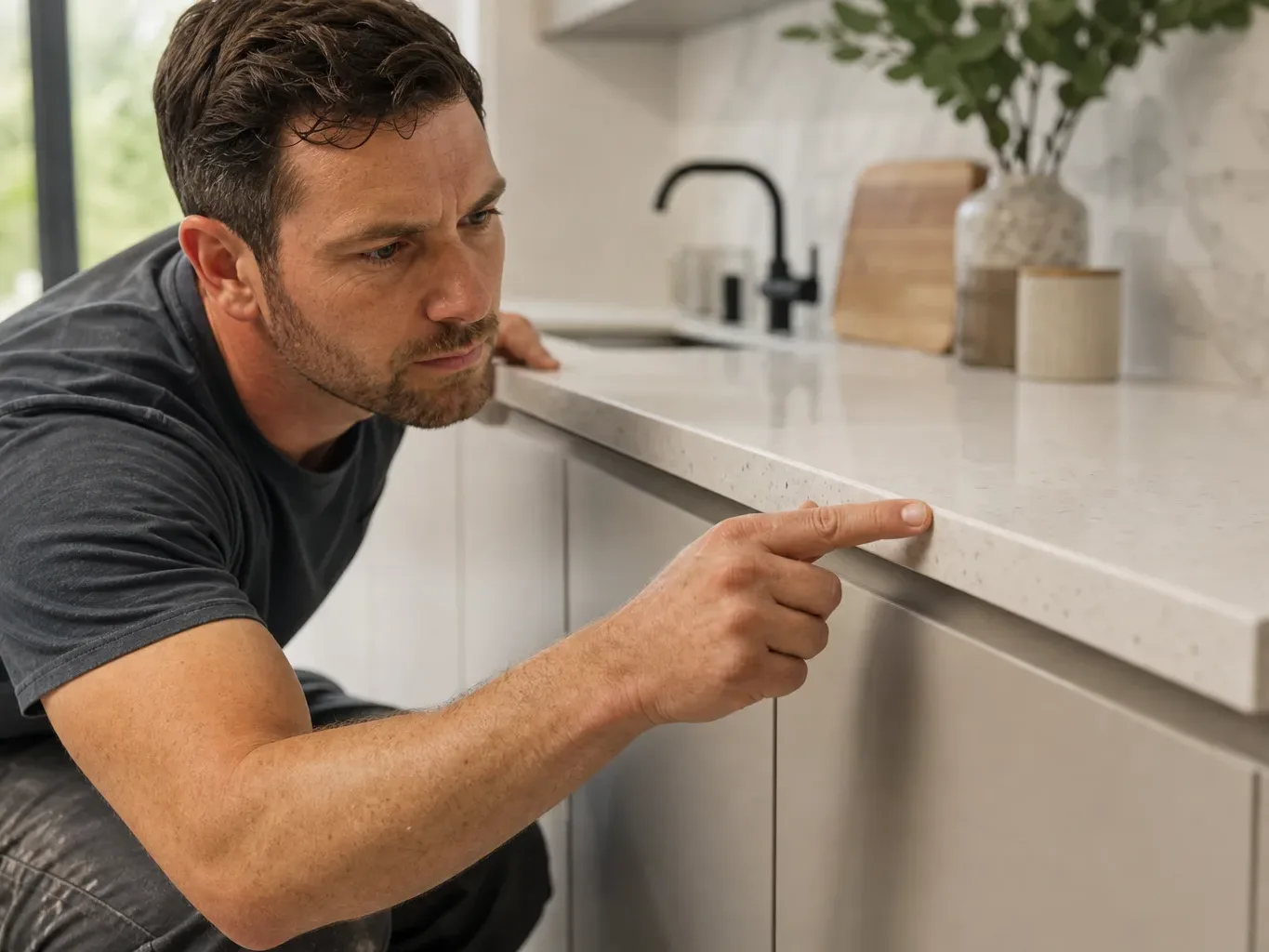
Engineered quartz is the most popular choice across mid-range and premium East Lothian kitchens right now, and for practical reasons. It is non-porous, so bacteria cannot penetrate the surface, and it requires no annual sealing. The colour and pattern are consistent through the full thickness, which means chipped edges are less visually disruptive than they would be on a laminate.
Installed quartz runs between £300 and £600 per linear metre across the region. Granite is broadly priced in the same range and delivers a similar robustness, though its natural variation means every slab is unique. Both materials are heavy, so worktop support and cabinet carcass strength are worth checking during design.
The main vulnerability with quartz is heat. Placing hot pans directly on the surface can cause thermal shock and cracking. Trivets are a sensible habit, not an optional extra.
Solid Wood Worktops - Character at a Lower Entry Price
Oak and hardwood worktops bring warmth to a kitchen that stone and engineered materials rarely match visually. The installed cost of solid wood runs from around £150 to £350 per linear metre, making it one of the more affordable natural-material options at the entry end of that range.
The trade-off is maintenance. Solid wood must be oiled regularly, typically three to four times in the first year and annually thereafter. Standing water is its enemy: East Lothian's coastal areas, particularly properties closer to Dunbar or North Berwick, can have kitchens with slightly higher ambient humidity, which matters for wood movement and drying time after cleaning.
Wood can be sanded back and refinished when it develops deep scratches or staining. That repairability is a genuine practical advantage that stone materials cannot offer. Rarer timbers such as walnut or iroko push costs toward the upper end of the range.
Porcelain Worktops - High Visual Impact, Specialist Fitting
Large-format porcelain slabs have moved from architect showrooms into mainstream kitchen retail over the past few years. Installed prices in East Lothian typically fall between £400 and £700 per linear metre, reflecting the specialist fabrication and cutting equipment the material demands.
Porcelain is essentially impervious: it will not stain, it tolerates heat better than quartz, and it does not require any sealing. Very large slabs can also be used to match worktops to splashbacks, which creates a clean and continuous visual effect popular in open-plan spaces.
The significant practical point is that not every kitchen fitter works with porcelain. The material cracks under improper cutting, and joiners or cabinet installers without specific stone experience should not be handling it. Confirm your installer's experience with large-format porcelain before ordering.
Laminate and Budget-Friendly Alternatives
Modern laminate has advanced considerably. Post-formed laminate with decorative finishes can convincingly replicate the appearance of stone or wood at a fraction of the cost, and it suits entry-level kitchen projects where the overall budget is £5,000–£10,000 for supply and full-fit.
Compact laminate and Dekton-style sintered surfaces occupy the upper-middle tier. They are thinner than stone, easier to transport, and more resistant to impact than standard laminate while still undercutting full quartz or porcelain on price. For rental properties or kitchens expected to be updated within a decade, laminate remains a rational choice rather than a compromise.
Scratching and edge chipping are the genuine weaknesses. Laminate cannot be refinished, and moisture ingress around sink cutouts remains a risk if the sealant degrades.
How to Match Materials to Your Kitchen Project
Budget sets the outer boundary, but lifestyle decisions narrow the shortlist much faster. Heavy cooking households, particularly those with children, benefit from non-porous, heat-tolerant surfaces. Quartz covers most of those requirements at mid-range cost, while porcelain suits the same household at a higher budget.
For period properties in Haddington or the East Lothian conservation villages, solid wood or granite often sits more naturally with the existing architecture. Slab and handleless cabinet styles in contemporary new builds or open-plan extensions tend to pair well with quartz or porcelain, which complement flat-fronted cabinetry visually.
Edge profiles are worth discussing with your supplier. A chamfered or ogee edge on granite can echo traditional kitchen design, while a pencil or square edge gives the clean line that suits modern schemes. Most kitchen suppliers in East Lothian offer an initial design consultation free of charge, so it is practical to bring worktop samples into that conversation before committing to a cabinet layout.
Fitting and Lead Times - What to Plan For
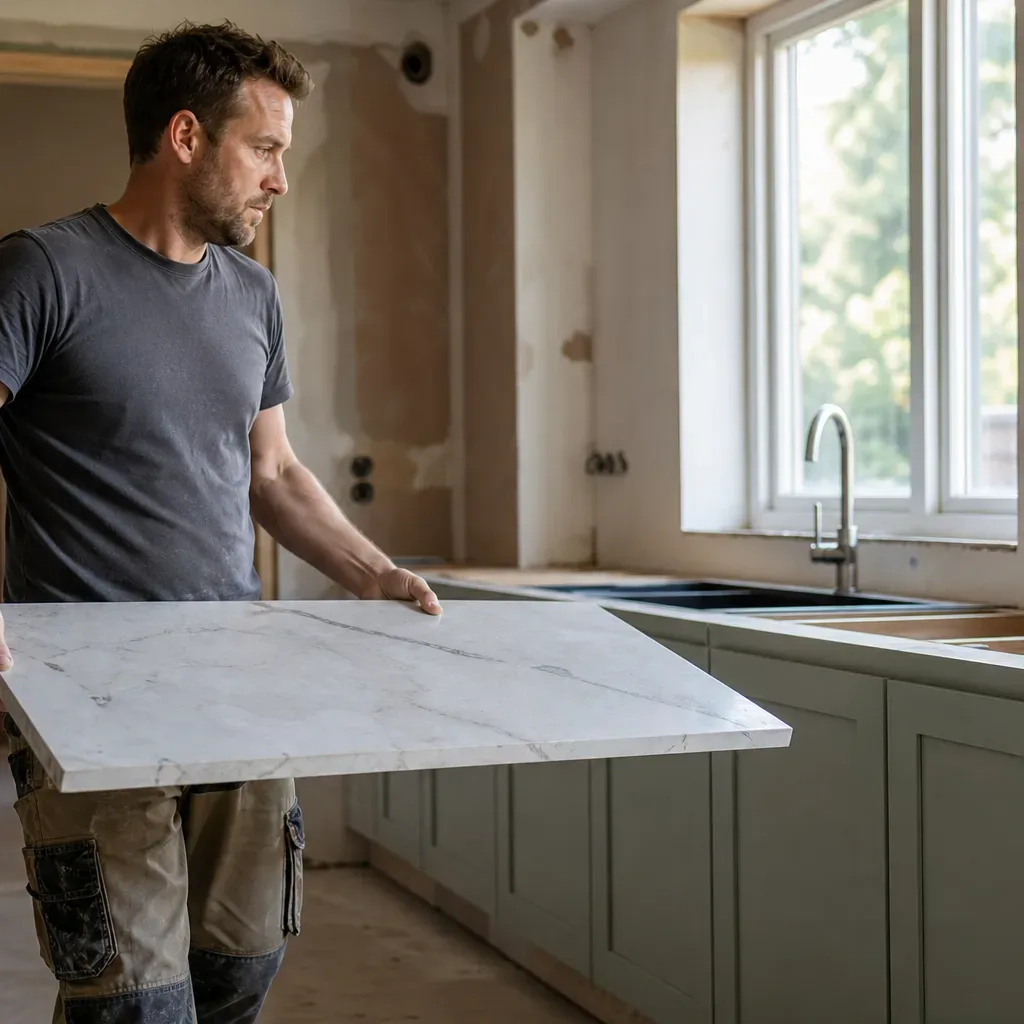
Worktops are almost always templated after cabinets are installed and level. The template visit, fabrication, and return installation typically add two to three weeks to the overall project timeline on top of the initial kitchen delivery lead time of 6–12 weeks from order.
A standard small to medium kitchen installation takes 5–10 days in total. Worktop templating and fitting usually occupies one to two of those days, depending on the number of cutouts for hobs and sinks and the complexity of corner joins. Larger or structurally altered kitchens, particularly those involving open-plan reconfigurations, can run to two to four weeks.
Kitchen fitters across East Lothian typically charge £200–£350 per day per tradesperson. Specialist worktop fabricators may quote separately, so clarify whether your installer's quote includes worktop templating, fabrication, and fitting or covers cabinetry only.
Caring for Your Worktop Long-Term
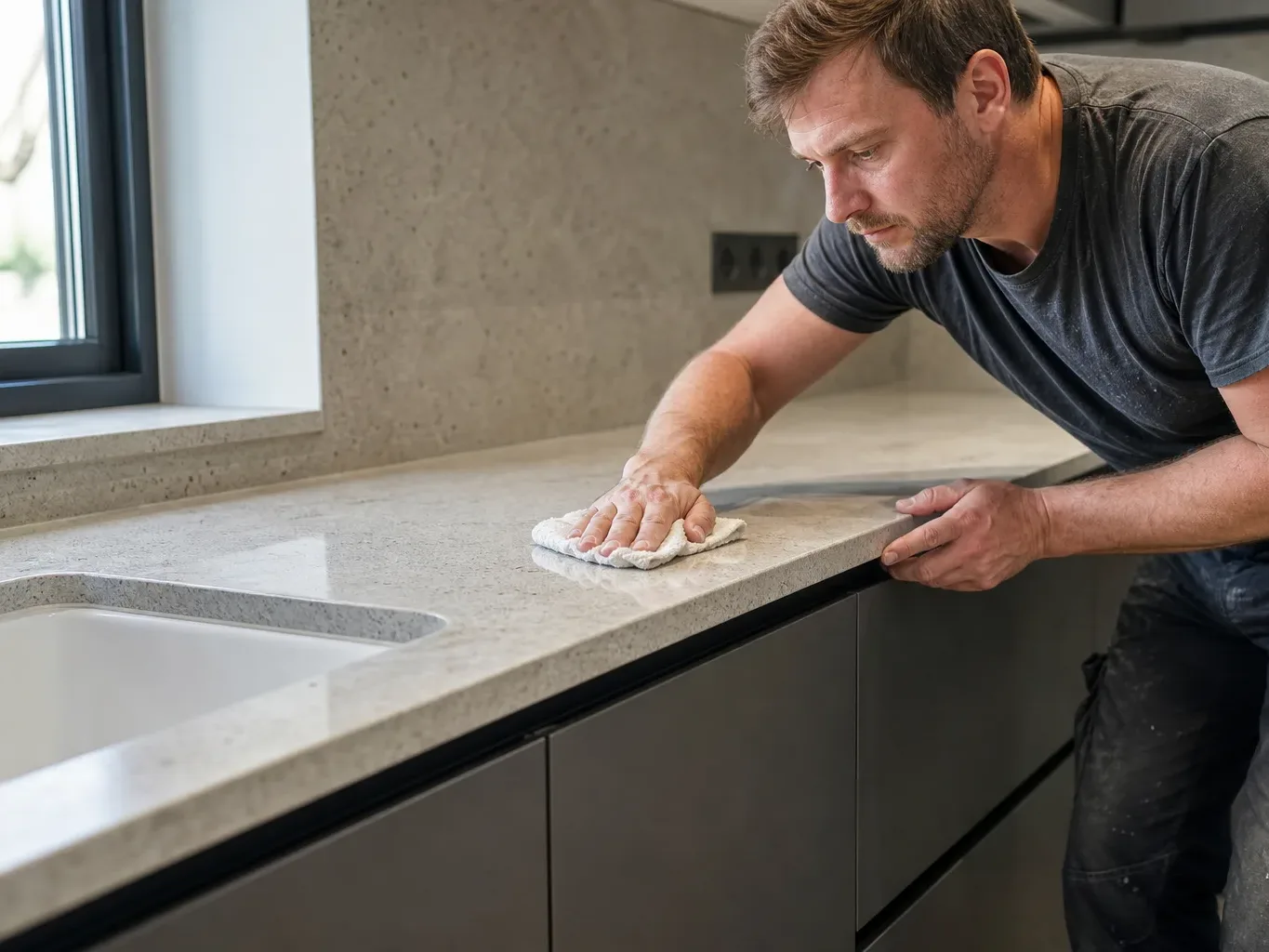
The material that requires least maintenance will not always suit your kitchen's aesthetic, so the practical care routine matters from day one. Quartz and porcelain need nothing beyond wiping down with mild detergent. Granite benefits from an annual sealant application using a product suited to natural stone.
Solid wood demands the most attention but is also the most forgiving of surface damage. A light sand and a fresh coat of Danish oil or hard-wax oil brings scarred timber back to life without full replacement. For any worktop material, the single most important habit is drying water from the surface around the sink rather than letting it pool, particularly at seams and around cutout edges.
A well-chosen worktop fitted properly can realistically last 15–25 years before needing replacement, a factor that justifies stretching the budget toward a more durable material even when the initial cost feels steep.
Frequently Asked Questions
Kitchen Worktop Materials Comparison - Which Is Best?
The best kitchen worktop material depends on your budget, cooking habits, and maintenance preference. Quartz offers the best balance of durability and low maintenance at £300–£600 per linear metre installed. Solid wood is warmer in appearance and cheaper at £150–£350 per linear metre but requires regular oiling. Porcelain is the most heat-resistant and stain-proof option at £400–£700 per linear metre but needs specialist fitting. Laminate suits tight budgets and works well in kitchens expected to be updated within a decade.
How Much Do Kitchen Worktops Cost in East Lothian?
Installed worktop costs in East Lothian vary by material. Solid wood runs from £150–£350 per linear metre, quartz and granite from £300–£600 per linear metre, and large-format porcelain from £400–£700 per linear metre. These prices include templating, fabrication, and fitting. Laminate sits below all of these, typically as part of an entry-level kitchen budget of £5,000–£10,000 for a full-fit project.
Does Quartz Worktop Need Sealing?
No, quartz worktops do not need sealing. Quartz is an engineered, non-porous material, so bacteria and liquids cannot penetrate the surface without any sealant treatment. This is one of its key practical advantages over natural stone such as granite, which benefits from an annual sealant application to maintain stain resistance.
How Long Does Worktop Fitting Take in a Standard Kitchen?
Worktop fitting typically takes one to two days as part of a full kitchen installation. The process involves a template visit after cabinets are levelled, followed by off-site fabrication, then a return to fit and seal. Full kitchen installations in East Lothian generally take 5–10 days for a small to medium kitchen, with worktop fitting occurring toward the end of that period.
Can a Solid Wood Worktop Be Repaired If It Gets Scratched?
Yes, solid wood worktops can be sanded back and refinished when they develop scratches or staining, which is a significant practical advantage over stone or laminate. Light surface scratches respond to a light sand and a fresh application of Danish oil or hard-wax oil. Deeper damage may require a more thorough sanding before refinishing, but the worktop rarely needs full replacement as a result of surface wear alone.